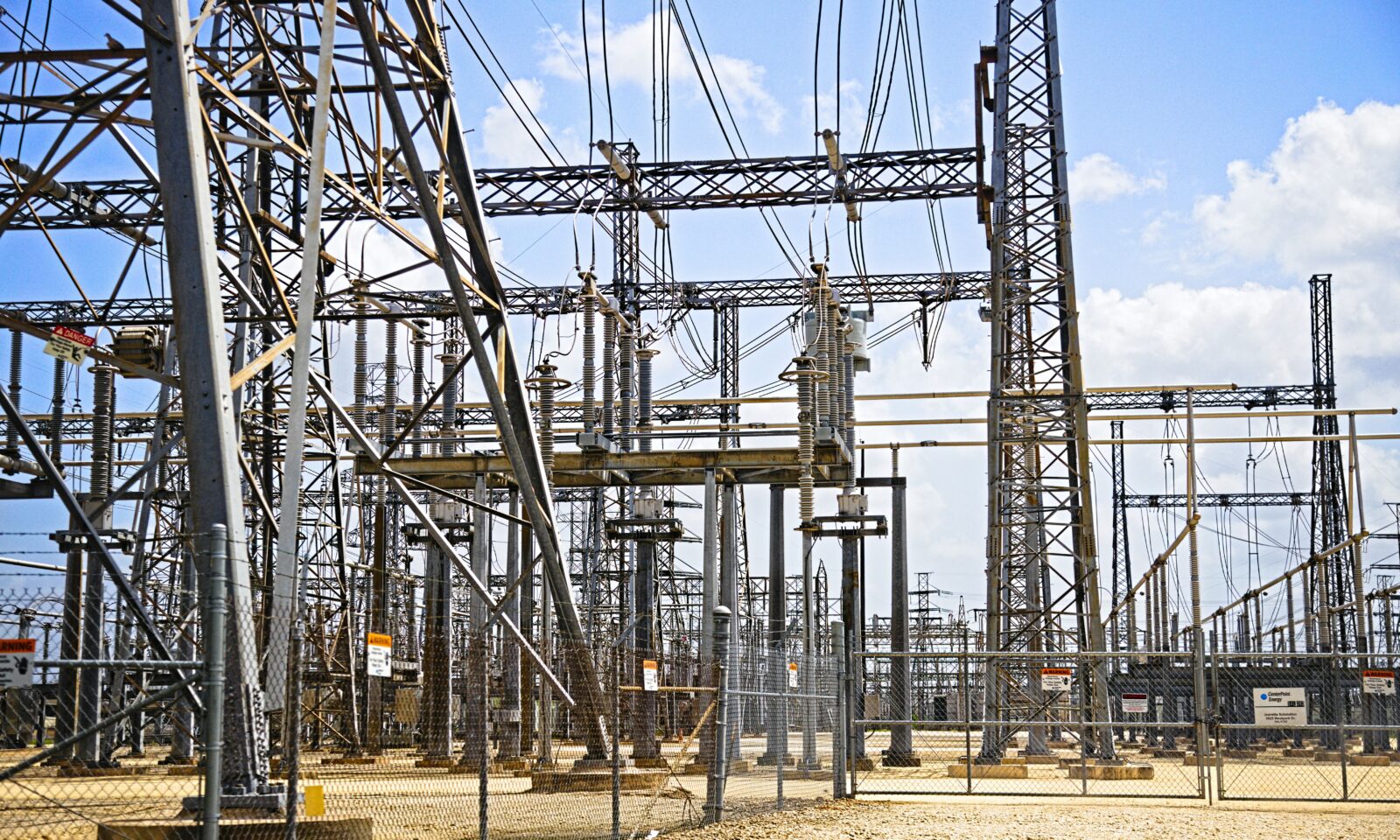
Texas is converting its data-center boom into a new political bargain. State leaders are auditing every large data-center project seeking a grid connection, considering tighter water and tax rules, and warning that projects unable to meet reliability requirements may not connect. The shift matters beyond Texas because it changes what artificial-intelligence infrastructure developers must prove before communities accept their growth.
Gov. Greg Abbott ordered the Public Utility Commission of Texas and the Electric Reliability Council of Texas to conduct a comprehensive audit of data centers in the interconnection process. In an Aug. 3 directive, his office said the queue contained more than 474 gigawatts of requests — more than five times the state’s current peak demand — and said a project could be denied grid access if it failed to demonstrate financial, operational or reliability requirements.
That 474-gigawatt figure should not be mistaken for a forecast of completed demand. Interconnection queues can include speculative, overlapping or early-stage projects. Its significance is institutional: the volume is large enough that state government no longer treats each request as an isolated real-estate or utility decision.
A queue became a governance problem
ERCOT’s April large-load update had already shown about 410 gigawatts in the queue, with data centers representing 87% of requested load. Even if a fraction is built, the scale changes transmission planning, generation needs and the risk of reserving capacity for projects that never materialize.
Data Center Dynamics reported that ERCOT expects to complete the audit by December. The process gives policymakers a clearer view of which proposals are credible and gives developers a reason to strengthen financial commitments, engineering plans and timelines.
The policy response is widening. The Texas Tribune reported Sept. 5 that Abbott proposed ending a sales-tax exemption for data centers and imposing requirements that would reduce pressure on water systems, including closed-loop approaches. The details will depend on legislation and implementation, but the direction is clear: public incentives are no longer being discussed separately from public resource costs.
Political support can no longer be assumed
Reuters documented a broader Republican backlash over power, water and tax incentives. That is a notable change in a state known for business recruitment and energy development. AI infrastructure is still associated with investment and jobs, but residents increasingly encounter it through utility bills, land-use debates and concern about scarce resources.
The industry’s challenge is that a data center can be economically enormous while employing relatively few people after construction. That does not make a project undesirable, but it weakens the traditional exchange in which tax concessions are justified primarily by permanent job creation. Communities will ask who pays for new substations, transmission, generation and water systems — and who receives the long-term benefit.
Site selection is becoming public strategy
For hyperscalers, cloud companies and developers, the lesson is to treat community legitimacy as core infrastructure. A credible proposal should disclose realistic load timing, demonstrate that power arrangements do not shift risk to households, explain water use under drought conditions and show what happens if the project is delayed or canceled.
Alternative power and cooling technologies will matter, but so will contract design. Flexible-load agreements, stronger deposits, phased interconnection and requirements to curtail under stress can make a project more compatible with grid operations. The policies must be evaluated carefully: overly blunt rules can delay useful investment, while weak rules can socialize infrastructure costs.
The AI buildout now has a social license
Texas is not rejecting data centers. It is signaling that access to the state’s growth model is conditional. Developers will be expected to arrive with more than land, financing and a queue position. They will need a public case for how the project strengthens — rather than merely consumes — local systems.
That changes the competitive landscape. Companies capable of pairing compute investment with credible energy, water and community commitments may move faster than rivals with larger ambitions but weaker local strategy. In the next phase of AI, the scarce resource is not only chips or electricity. It is permission.