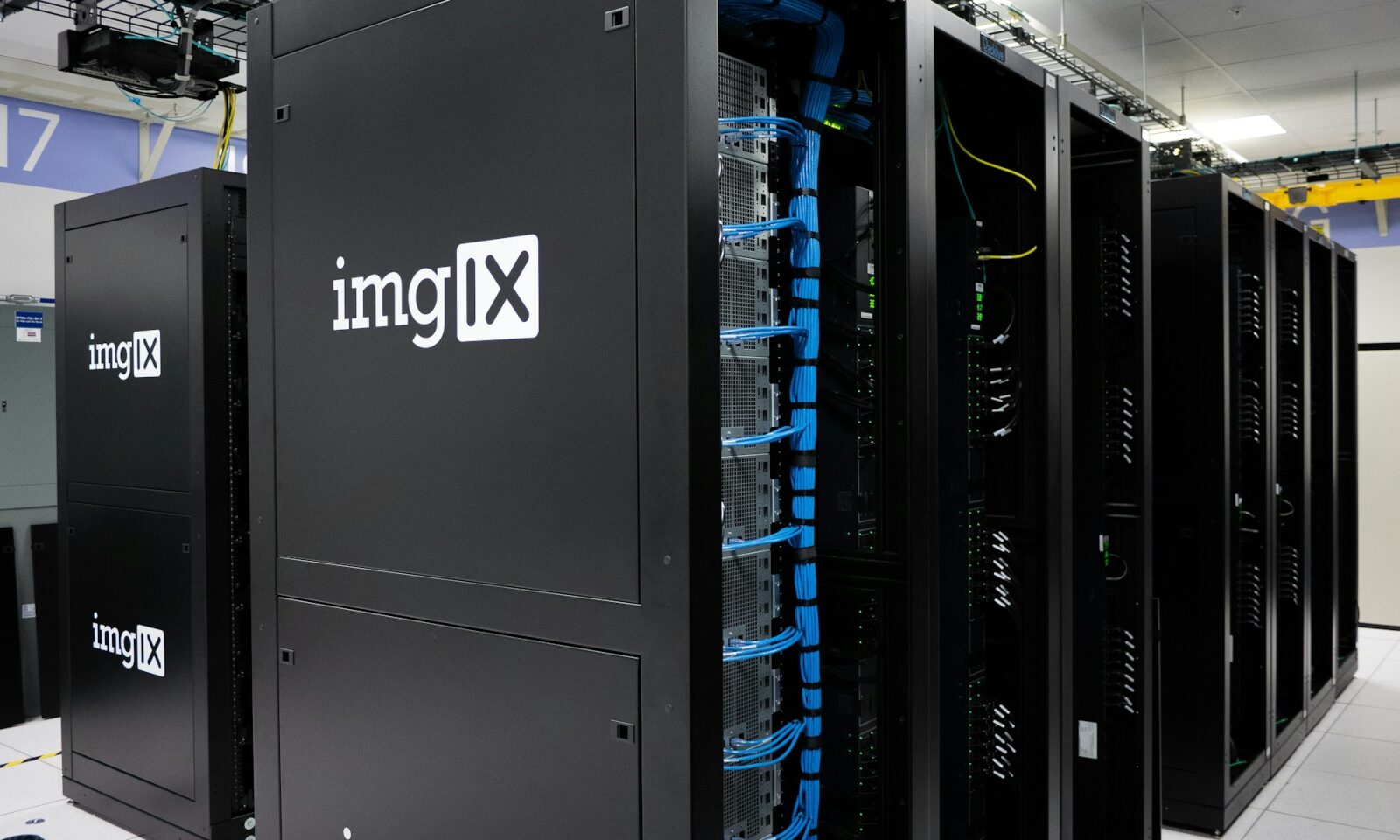
NEW YORK — The global artificial intelligence build-out is moving deeper into the physical economy, driving record semiconductor earnings and plans for data-center campuses with power systems large enough to serve cities.
The latest developments show technology companies and their suppliers committing capital to memory chips, factories, transmission systems, natural gas plants and battery storage. They also show the financial and regulatory risks attached to projects that can take years to complete.
Samsung Electronics reported a record operating profit of 89.5 trillion won, or about $62 billion, for the April-to-June quarter. Revenue reached 171.5 trillion won, or about $119 billion, also a company record.
According to The Associated Press, Samsung’s operating profit increased more than nineteenfold from the same period a year earlier. Nearly all of the profit came from its semiconductor business, which benefited from higher chip prices and demand for high-bandwidth memory used in AI servers.
Samsung said demand for server memory is likely to remain strong as data-center operators expand AI infrastructure. The company expects the gap between supply and demand to widen in 2027 and plans to begin building a second semiconductor fabrication facility in Taylor, Texas, before the end of this year, with production targeted for 2030.
Record earnings and rising commitments
SK Hynix, Samsung’s South Korean competitor, also reported record second-quarter revenue. Together, the two companies produce about two-thirds of the world’s memory chips.
Samsung and SK Hynix have announced plans to invest a combined 800 trillion won, about $554 billion, in a South Korean chipmaking hub. Samsung has also said it secured long-term supply agreements with five major global data-center customers, though it did not identify them publicly.
The earnings have not removed concerns about the pace of investment. Shares of both companies declined after their reports as investors weighed the cost of adding capacity, competition from Chinese manufacturers and the possibility that large commitments may take years to generate returns.
The same demand is changing how data centers are planned. Instead of relying only on existing power grids, some proposed projects include dedicated generation and storage.
A $100 billion proposal in Kentucky
The U.S. Department of Energy selected Brookfield Asset Management to develop and operate an AI data-center complex at the former Paducah Gaseous Diffusion Plant in western Kentucky, a Cold War-era uranium-enrichment site that remains under federal cleanup.
The proposed project represents up to $100 billion in spending, according to details reported by the AP. Brookfield estimated that about 30% would go toward constructing the data center and power components. The remainder would be spent on equipment including servers, networking hardware and semiconductor chips.
NextEra Energy would build and own 2 gigawatts of natural gas-fired generation and 2.6 gigawatts of battery storage to support a 1.8-gigawatt data-center campus. The gas facility would be the largest in Kentucky.
The project requires approval from state utility regulators, and discussions with potential data-center customers are continuing. Construction is expected to be completed in 2031.
The Paducah facility stopped enriching uranium in 2013. The Energy Department has projected that cleanup of the roughly 3,550-acre site will continue until 2065 and cost about $17 billion.
Local environmental and public-health advocates have asked for independent review of potential effects on water supplies, greenhouse-gas emissions and utility customers. They have also called for existing environmental permitting requirements to remain in place.
Industrial policy joins the technology race
Governments outside the United States are also treating computing capacity as strategic infrastructure. The European Commission’s proposed Cloud and AI Development Act aims to at least triple European Union data-center capacity within five to seven years and meet projected demand from businesses and public agencies by 2035.
The EU is separately developing AI factories and a proposed 20 billion euro investment facility for as many as five large AI gigafactories. Those facilities would combine advanced processors, networking, power systems and automation for training and operating large models.
Many of the announced projects remain subject to financing, permitting, customer commitments and construction schedules. Their scale nevertheless shows that AI competition is increasingly being measured in power capacity, chip supply and the ability to build physical infrastructure, alongside model performance and software adoption.