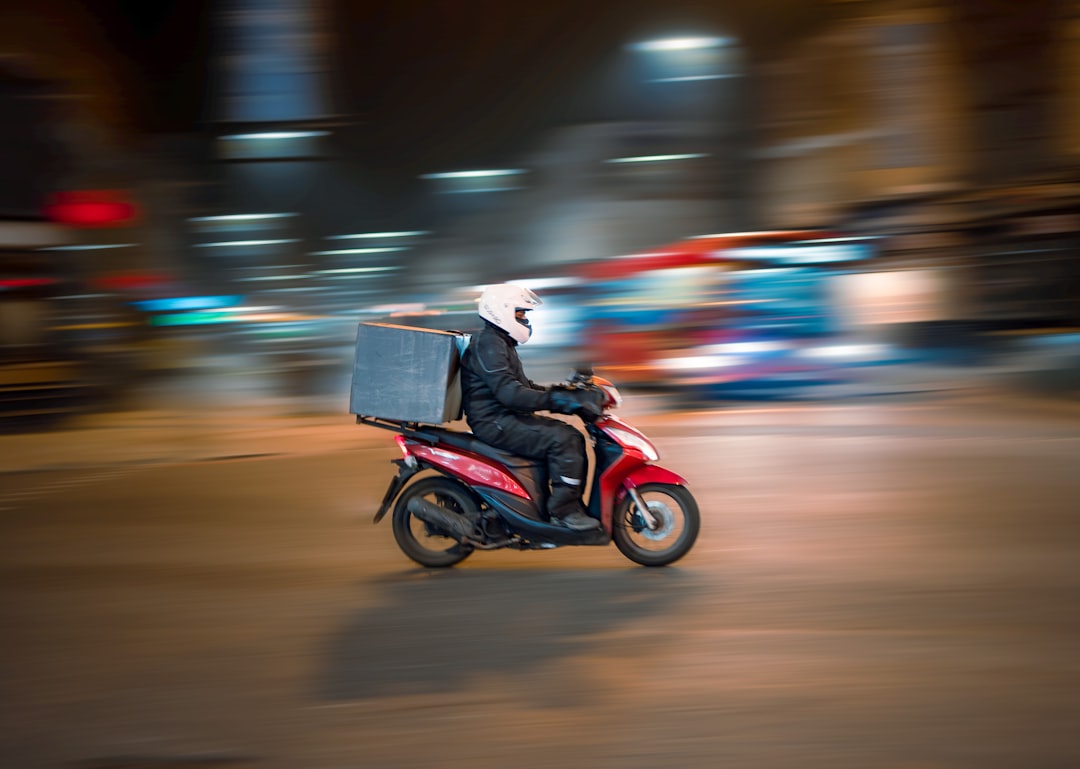
DoorDash is still growing like a marketplace. Its next act looks more like a logistics operating system.
The company reported 970 million orders in the second quarter, up 27% from a year earlier, while marketplace gross order value rose 36% to $33.1 billion and revenue reached about $4.45 billion, according to Reuters. Those numbers matter because they give DoorDash something autonomous-delivery startups do not have: enormous existing demand to route.
The strategic question is no longer simply how many orders DoorDash can attract. It is how intelligently the company can decide how each order should move.
One marketplace, multiple delivery modes
DoorDash has been explicit about the architecture it is building. Its autonomous delivery platform is designed to select the best fulfillment mode for an order based on factors including speed, cost and location. That mode can be a Dasher, DoorDash’s in-house Dot robot, a sidewalk robot or a drone.
That is a fundamentally different proposition from building one impressive autonomous vehicle.
A delivery network has to cope with apartment buildings, gated communities, bad weather, oversized grocery orders, restaurant wait times, short suburban trips and dense urban routes. No single vehicle is likely to be optimal for all of them.
The valuable system is therefore the dispatcher that understands the order, the geography, the available capacity and the economics well enough to choose among modes.
Automation only works if the handoffs work
DoorDash’s Dot illustrates both the promise and the difficulty. The compact electric robot can operate on roads, bike lanes, sidewalks and driveways, and DoorDash says it can run for more than six hours on a charge. But autonomy does not eliminate the operational system around the vehicle.
Orders still have to be prepared at the right time, loaded correctly, routed around real-world obstacles and delivered into environments that may require gates, elevators, codes or human interaction. DoorDash also uses merchant tools such as SmartScale to improve order accuracy and prepare orders for delivery methods with stricter weight requirements.
Those details are where autonomous delivery stops being a robotics demonstration and becomes an operating model.
The company’s advantage may come from being able to connect those handoffs to a marketplace that already knows when the restaurant accepted the order, how long preparation usually takes, where the customer is, what the order contains and which fulfillment resources are nearby.
The economics are in orchestration
DoorDash’s model increasingly resembles cloud computing more than a taxi queue.
Cloud infrastructure does not send every workload to the same machine. It routes jobs across resources according to cost, capacity, latency and requirements. A mature last-mile network could behave similarly.
A short, lightweight suburban order might go by robot. A time-sensitive small order could be a candidate for air delivery. A complex handoff or large grocery basket may remain better suited to a human courier. The customer may barely notice which resource the network selected.
If DoorDash can make that allocation decision reliably, automation does not need to replace Dashers wholesale to change the economics. It only needs to take the orders where another mode produces a better combination of speed, cost and service.
The marketplace becomes harder to displace
This is also a platform strategy.
A marketplace that merely aggregates demand can be competed with through price, selection or consumer acquisition. A marketplace that also owns the orchestration layer between merchants, customers, identity, payments and multiple forms of physical fulfillment becomes more deeply embedded.
That helps explain why DoorDash continues investing aggressively even while those investments pressure near-term profit. The company is trying to move from being the place where a delivery order starts to being the infrastructure that decides how local commerce gets fulfilled.
The distinction matters.
The original DoorDash product answered a consumer question: Who can bring this to me?
The emerging system answers a much more valuable operational one: What is the best resource in this network to complete this particular job?
If DoorDash can answer that at scale, the long-term asset is not any one robot, drone or courier fleet. It is the decision engine coordinating all of them.