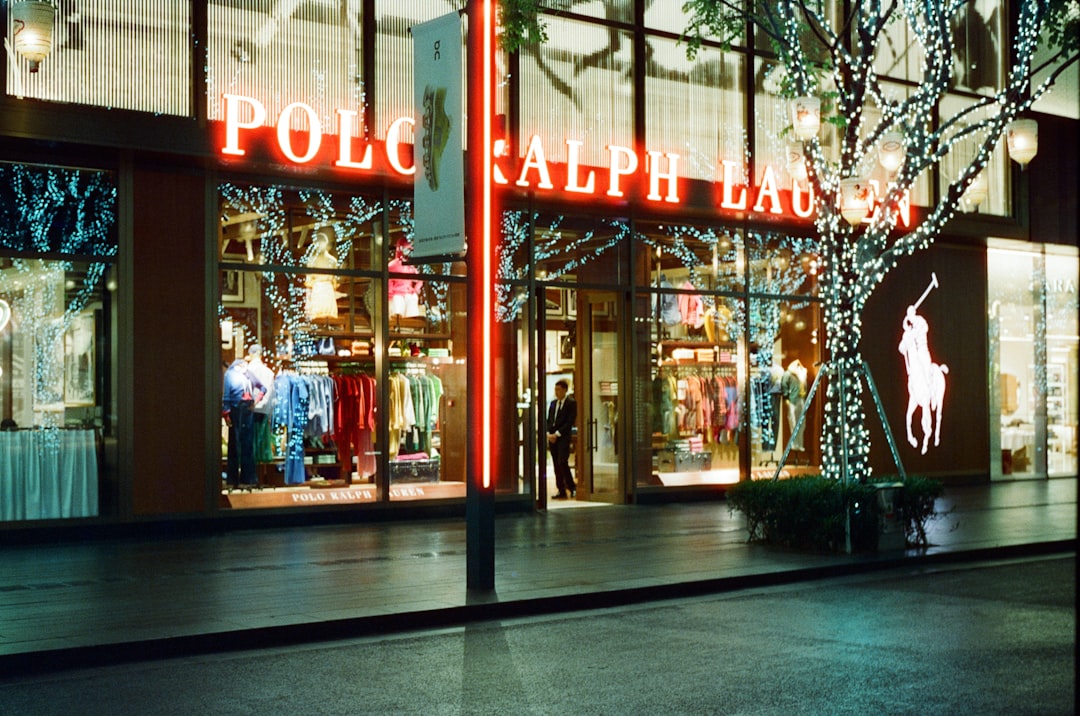
Ralph Lauren has spent nearly a decade doing something many legacy brands say they want but few manage to execute: getting younger without getting cheaper.
The company’s latest results make that distinction harder to dismiss as branding language.
Ralph Lauren reported $1.96 billion in first-quarter revenue, ahead of Wall Street expectations, with North American sales up 13% and Asia up 24%. China grew more than 40%, an unusually strong result in a luxury market that has spent much of the past two years wrestling with slower demand. The company also raised its full-year revenue outlook. Reuters reported that younger shoppers in Asia and North America helped drive demand for products ranging from linen shorts to leather bags.
The earnings beat is useful. The more interesting story is how Ralph Lauren is producing it.
The company says it added about 1.5 million new consumers through its direct-to-consumer businesses during the quarter. Its social audience has grown beyond 70 million followers. At the same time, Ralph Lauren has continued raising average unit retail, reducing discount rates and pulling back from lower-tier wholesale exposure.
Those strategies normally appear to be in tension. Recruiting younger consumers often leads brands toward lower prices, faster product cycles, trend-driven collaborations or greater promotional activity.
Ralph Lauren has largely moved in the opposite direction.
The signal is not the earnings beat
Luxury and premium retail are not collapsing. They are becoming more selective.
Bain expects personal luxury goods sales to grow roughly 2% to 4% in 2026, a recovery but hardly a return to the category’s earlier expansion. LVMH recently reported 3% organic second-quarter growth. Gucci improved, but still recorded its 12th consecutive quarterly sales decline. Consumer demand exists. It is simply concentrating around brands that shoppers still consider worth paying for.
That makes Ralph Lauren’s performance particularly revealing.
The company is not competing in precisely the same segment as a European luxury house. Its portfolio spans accessible premium products, luxury collections, home, hospitality and accessories. That breadth gives it more price points and more ways for a consumer to enter the brand.
But a broad price architecture is not the same thing as discounting.
That distinction may be one of Ralph Lauren’s most important advantages.
Younger consumers are entering Ralph Lauren’s world
One of the easiest ways for an established brand to lose relevance is to decide that relevance requires acting like someone else.
Companies see younger consumers moving toward a new aesthetic, platform or cultural reference point and begin redesigning themselves around it. Logos change. Product gets louder. Collaborations multiply. The marketing begins speaking in a tone that does not belong to the brand.
Sometimes it works.
Often it signals insecurity.
Ralph Lauren’s current strategy is almost the inverse. The brand has modernized the ways consumers encounter it while keeping the underlying world remarkably stable.
Polo. Tennis. Sailing. Western Americana. Ivy League references. Resort dressing. Equestrian culture. The American flag. Ralph’s Coffee. The Hamptons. Wimbledon.
These are not newly invented Gen Z interests. They are long-standing pieces of Ralph Lauren’s vocabulary.
The company’s current A Sporting Life campaign, for example, builds around the same relationship between sport, leisure and aspiration that has shaped the brand for decades. Ralph Lauren has expanded that storytelling across newer channels and markets rather than discarding it to appear contemporary.
The result is a subtle but important shift in how generational relevance works.
Ralph Lauren is not becoming younger.
Younger consumers are finding new reasons to want Ralph Lauren.
Price discipline is part of the product
The company has also been unusually disciplined about the relationship between availability and desirability.
In its fiscal 2026 results, Ralph Lauren said average unit retail increased by the mid-teens for both the fourth quarter and the full year. Management attributed that increase partly to stronger full-price selling and lower discount rates. The company also reduced exposure to lower-tier wholesale channels in North America.
That matters because discounting trains consumers.
A shopper who repeatedly sees a $300 item marked down to $180 eventually learns that $180 is the real price. The promotion may produce a transaction, but it also changes the customer’s perception of value.
Premium brands can therefore create a trap for themselves. Discounts generate volume in the short term while making full-price purchasing harder in the long term.
Ralph Lauren has been trying to reverse that equation for years: fewer indiscriminate promotions, better product, stronger stores and more control over where the brand appears.
Now younger customer acquisition is rising alongside that elevation strategy.
That is a much more valuable signal than customer growth achieved through lower prices.
China makes the strategy easier to see
China may be the clearest test.
The broader luxury market there remains uneven. Economic uncertainty and a prolonged property downturn have made many consumers more selective. Recent research from McKinsey and Bain suggests Chinese luxury buyers increasingly scrutinize value, cultural relevance and the meaning behind a purchase rather than simply buying into category status. McKinsey’s 2026 luxury research argues that desirability and exclusivity are being defined differently across major markets.
Against that backdrop, Ralph Lauren’s more than 40% China growth stands out.
The company has invested in physical retail, including a flagship in Chengdu, while building localized brand experiences around the same broader Ralph Lauren universe. Reuters pointed to the company’s Polo Cup in Beijing as one contributor to engagement.
This is not simply geographic expansion.
It is ecosystem expansion.
A store, sporting event, social campaign, handbag, polo shirt and coffee shop can all serve as different entry points into the same brand story.
That makes Ralph Lauren less dependent on one hero product or one fashion cycle than many competitors.
The lifestyle model creates more doors without lowering the ceiling
This may be the most transferable part of the strategy.
Ralph Lauren has always sold more than clothing. It sells a visual and cultural idea of how life might look.
That sounds like advertising language until it becomes an operating advantage.
A younger consumer does not need to begin with a Purple Label jacket. The first interaction might be a cap, a Polo shirt, a vintage sweater, a TikTok video, a coffee, a sports sponsorship or a secondhand piece discovered online.
Those lower-friction entry points do not require the company to lower the positioning of its highest-end products.
That creates a ladder rather than a sale rack.
The distinction is important for premium brands trying to broaden their audience. Accessibility can come from category breadth, experience, content and product architecture. It does not always need to come from price erosion.
What other brands should learn from Ralph Lauren
There is a temptation to reduce every successful retail story to a formula.
Ralph Lauren’s formula is not transferable in that sense. Few companies possess six decades of cultural memory, one of the most recognizable logos in fashion and a founder who built an unusually coherent visual world.
But the operating principles are transferable.
Know which parts of the brand are permanent.
Modernize distribution without modernizing away the identity.
Create multiple entry points for new customers instead of using discounts as the primary acquisition tool.
Use culture to reinforce the brand rather than borrow relevance from whatever happens to be popular.
And treat full-price demand as a strategic metric, not merely a financial one.
Ralph Lauren’s recent growth does not mean younger shoppers have suddenly become nostalgic for everything old.
It suggests something more useful.
Consumers can distinguish between a brand with history and a brand trapped by its history.
Ralph Lauren has been using new stores, new channels, new categories and new cultural moments to make an old proposition easier to enter without making it less valuable once consumers get inside.
For premium brands watching younger audiences become harder and more expensive to acquire, that may be the lesson worth paying attention to.
Relevance is not the same as novelty.
A brand can change who enters the room without repainting the room every season.