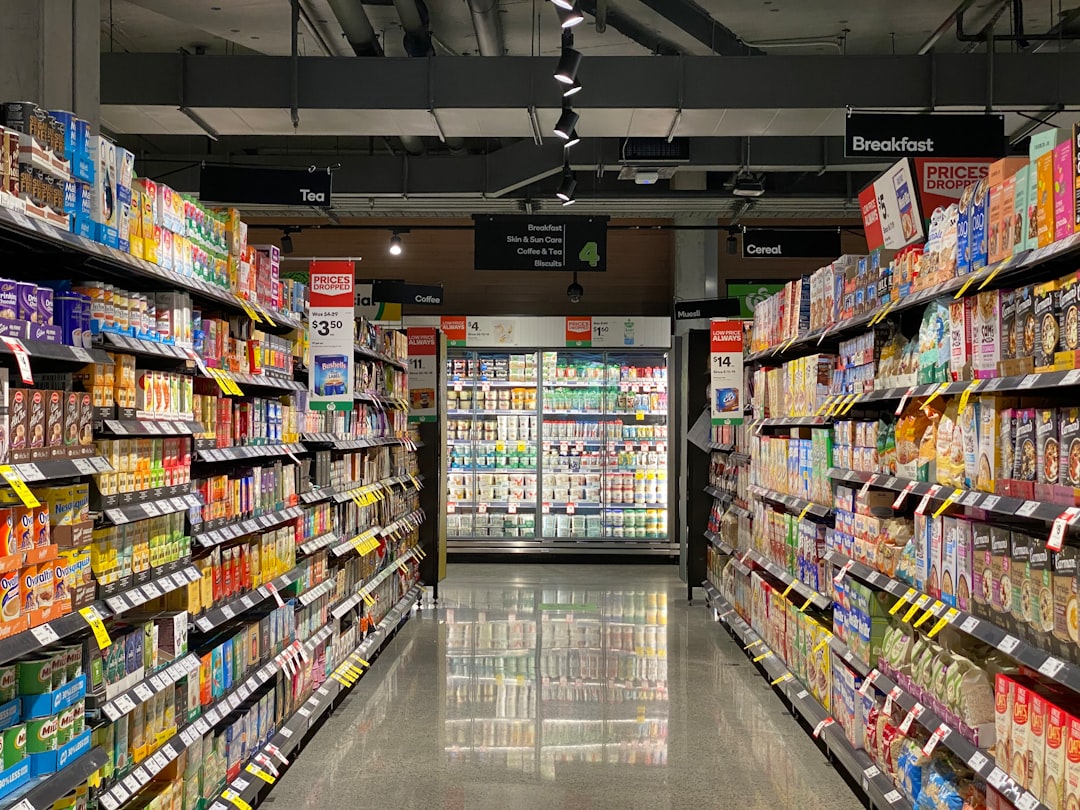
Higher grocery prices are changing what Americans put in their carts, but the shift is more complicated than a simple move from premium products to cheaper ones.
Food-at-home prices were 2.7% higher in June than a year earlier, according to the U.S. Department of Agriculture’s July Food Price Outlook. USDA expects grocery prices to rise an average of 2.7% in 2026. That comes after several years in which households already absorbed large cumulative increases across food, housing, energy and other essentials.
Consumers are responding. Store brands are taking more space in the basket, unit demand across packaged food and beverage remains soft, and shoppers are becoming more deliberate about what deserves a premium.
For boutique food and beverage companies, however, the evidence does not point to the death of premium pricing. It points to a higher standard for earning it.
Private label is gaining because it no longer feels like a compromise
The trade-down toward store brands is measurable.
Private-label unit sales rose 0.2% during the first half of 2026 while national-brand unit sales declined 0.5%, according to the Private Label Manufacturers Association, using Circana data through June 14. Store brands reached a record 23.8% unit share.
The longer trend is even clearer. Store-brand dollar sales rose 3.3% in 2025, nearly three times the 1.2% growth of national brands. Store-brand unit volume increased 0.6% while national-brand volume declined 0.6%. The PLMA 2026 Private Label Report put total U.S. store-brand sales at a record $282.8 billion last year.
Price is part of the appeal, but it is no longer the entire explanation.
A nationally representative FMI survey of 1,495 U.S. grocery shoppers conducted in March found that 92% had private-brand products in their homes and nearly half had increased their store-brand purchases during the previous year. More strikingly, 94% said they would continue buying store brands even if grocery prices declined. Taste and quality were increasingly cited as reasons for buying more private label, according to FMI’s 2026 consumer research.
That changes the competitive equation for smaller premium brands. The substitute on the shelf may no longer be a visibly inferior generic product. It may be an attractive, well-designed retailer brand with credible ingredients, strong packaging and a meaningful price advantage.
Premium is under pressure, but it is not collapsing
Public retail data do not provide a clean national measure for “boutique” food and beverage brands as a standalone segment. Specialty, challenger and premium products are spread across categories and channels, making claims about a single boutique-brand decline difficult to support.
What the available data do show is a bifurcation in consumer behavior.
Circana reported in late July that retail food and beverage unit volume was down 0.6% in the latest four-week period ending July 12, while price and product mix increased 2.6%. The firm described consumers as making fewer, more intentional purchases while continuing to prioritize products that deliver outcomes such as quality, relevance and wellness.
A month earlier, Circana’s CPG Demand Signals report found that premium brands were continuing to hold as financially pressured shoppers adjusted how much they bought rather than automatically abandoning preferred products. Some consumers were moving to smaller package sizes to stay with brands they valued.
That is an important distinction.
The consumer may trade down in flour, paper towels or pantry staples and still pay more for coffee, olive oil, chocolate, a functional beverage or a specialty sauce. The decision is increasingly being made product by product rather than across the entire basket.
The Specialty Food Association’s 2026 industry outlook describes the same tension: greater value consciousness alongside sustained demand for premium and artisanal products, with challenger brands continuing to gain relevance.
Premium is not disappearing. Indistinguishable premium is becoming harder to defend.
The first job is to make the premium obvious
When shoppers have more credible lower-priced alternatives, brand positioning has to do more work at the shelf.
Claims such as “premium,” “artisan” or “small batch” are not, by themselves, reasons to spend more. The consumer needs a concrete answer to a simple question: What am I getting here that I cannot get from the product next to it?
That difference might be ingredient quality, provenance, taste, a functional benefit, a proprietary process, convenience or a distinctive experience. Whatever the answer is, it needs to be visible quickly in packaging, merchandising and communication.
Brands should be especially cautious about relying on origin stories that do not translate into product value. A compelling founder narrative may build affinity, but it will not necessarily protect a $4 price gap if the shopper cannot taste, feel or otherwise understand the difference.
Give customers a way to spend less without leaving the brand
One of the clearest signals in the Circana data is that pressured shoppers may prefer to reduce quantity before switching away from a product they value.
That creates an opportunity for premium brands to reconsider package architecture.
A smaller entry-size package can lower the immediate checkout price while protecting the brand’s per-unit premium. Bundles can create a stronger value proposition for high-frequency customers. Multipacks can reward loyalty without conditioning every purchase on a promotion. Subscription programs can offer predictable savings to consumers who already know they want the product.
The objective is not to disguise inflation through shrinkage. It is to create intentional price points that allow different customers to stay within the franchise.
For brands with a broader portfolio, a good-better-best structure can serve the same purpose. A consumer who needs to reduce spending should have somewhere to go inside the brand before the retailer’s private label becomes the obvious alternative.
Discounting is a tool, not a retention strategy
Promotions can support trial and move inventory, but persistent discounting carries a strategic cost for brands whose economics depend on premium positioning.
If shoppers learn that a $10 product is regularly available for $7, the promotion can become the reference price. That is particularly risky for smaller companies with less room than large CPG manufacturers to fund sustained promotional activity.
Retention programs should instead distinguish between customers who are genuinely price constrained and customers who have stopped seeing enough value in the product.
Those are different problems.
A loyal customer buying less frequently may respond to a smaller package, replenishment reminder, bundle or membership benefit. A customer who has switched because a competing product appears equally good at a lower price requires a product or positioning response, not another coupon.
First-party customer data becomes more valuable when loyalty is under pressure
Many emerging food and beverage companies still know considerably more about their wholesale customers than their end consumers.
That becomes a disadvantage in a trade-down environment.
Brands need to know which products produce repeat purchases, how purchase frequency changes after price increases, which customers migrate to smaller formats and where subscription or direct-to-consumer customers begin to lapse.
Retail distribution will remain essential for most packaged-food businesses, but direct relationships can provide information that a wholesale purchase order cannot. Sampling programs, loyalty programs, QR-enabled packaging, subscriptions, events and direct-to-consumer sales can all help a company understand the customers most likely to defend the brand in their household budget.
The goal is not collecting more email addresses. It is identifying what causes a consumer to make the same premium decision again.
The private-label threat is also a product-development signal
Store brands are becoming more sophisticated precisely because retailers have learned that value does not have to mean basic.
Private-label portfolios increasingly include premium, wellness-oriented and indulgent products alongside their lower-priced staples. That means boutique brands cannot assume they own innovation simply because they are smaller.
The response should not be to mimic private label on price. Smaller brands are unlikely to win a scale contest with the retailer controlling the shelf.
They can compete on speed, distinctiveness and intimacy with a specific consumer. That may mean faster flavor innovation, stronger cultural relevance, a clearer functional proposition or a more memorable product experience.
The burden is to keep widening the gap between “less expensive” and “good enough.”
Loyalty is becoming part of the product
The current grocery market presents two apparently conflicting facts.
Consumers are buying more private-label products and becoming more disciplined about spending. At the same time, current CPG data show that many shoppers continue protecting premium products they consider worth the money.
For boutique food and beverage brands, that is both warning and opportunity.
Customers are not necessarily abandoning premium. They are editing the premium products they keep.
The brands that survive that edit will be the ones that make their value easy to understand, give loyal customers flexible ways to stay in the franchise and build enough product distinction that the cheaper option does not feel equivalent.
In a period of persistent grocery inflation, retention is no longer only a marketing metric. It is evidence that the premium still means something.