There is a difference between protecting a brand and trying to own an entire creative territory.
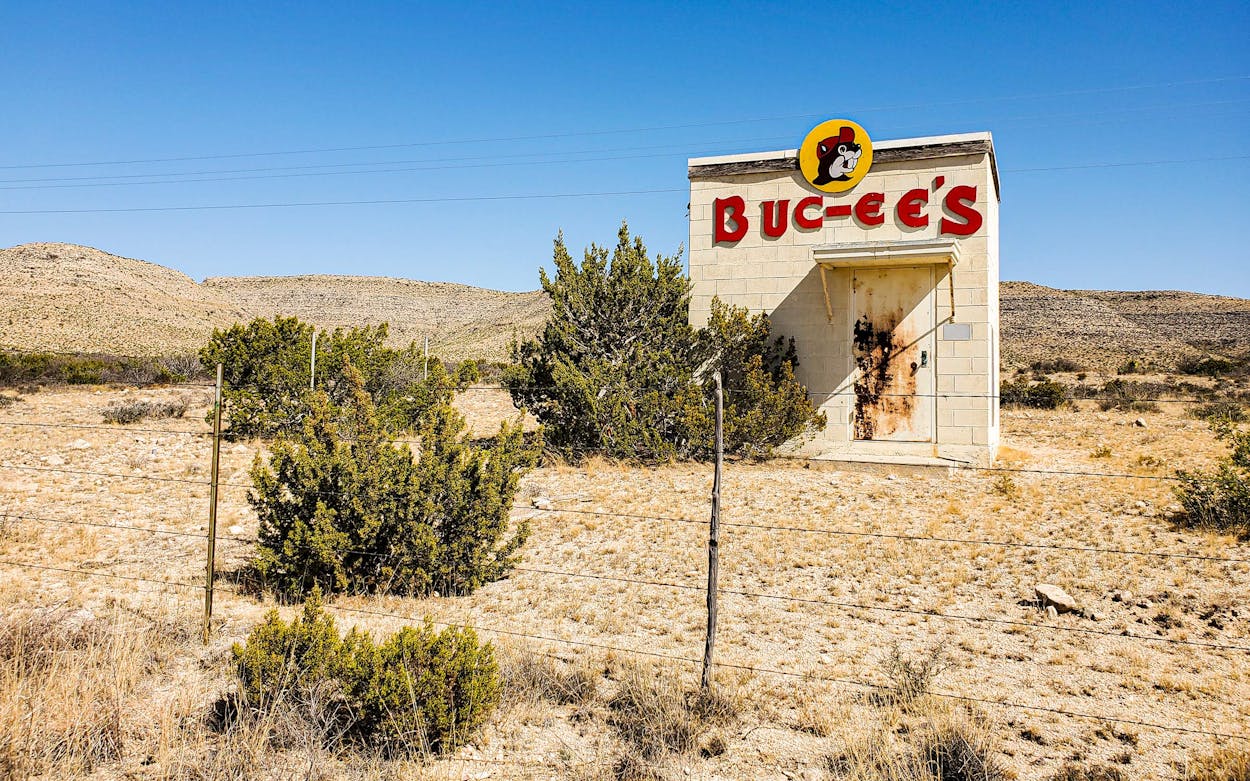
That distinction has become increasingly difficult to ignore as Buc-ee’s, the Texas-based travel center chain famous for its massive stores, countless billboards advertising clean bathrooms, beef jerky and smiling beaver mascot, continues to aggressively defend its trademarks. Over the years, the company has taken legal action against businesses whose names, logos, mascots, or overall branding it argues are too similar to its own.
Trademark enforcement is nothing new. Companies have every right to protect intellectual property and prevent competitors from deliberately confusing customers. But the Buc-ee’s disputes raise a larger question for the design community: how much visual territory should a corporation be able to claim?
For designers, illustrators, and small business owners, the answer matters. A lawsuit from a corporation with a large legal department can be enormously intimidating, even when the disputed design may seem far removed from the brand it allegedly copies.
And Buc-ee’s has become one of the most visible examples of that tension.
The Story Behind the Beaver
The irony is that Buc-ee’s own identity has a surprisingly complicated origin story.
Buc-ee’s founder Arch Aplin III has long been known by the nickname “Beaver.” According to accounts from Aplin and reporting about the company’s history, the nickname goes back to his childhood and was influenced by Bucky Beaver, the cartoon mascot used in advertising for Ipana toothpaste in the 1950s. Aplin also had a beloved Labrador retriever named Buck, and the company’s name eventually emerged from a combination of those influences.
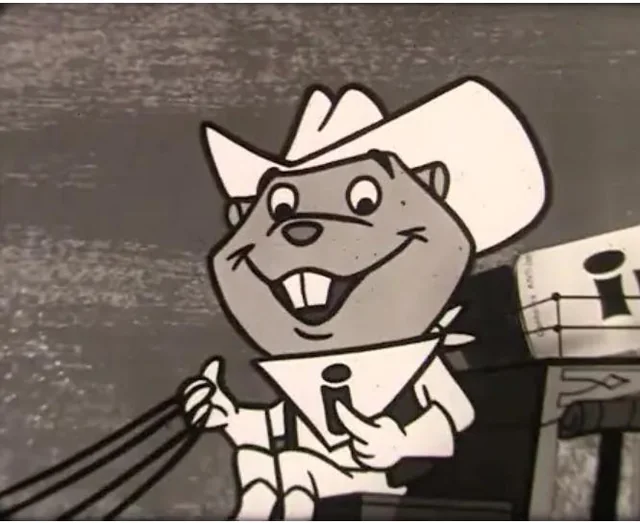
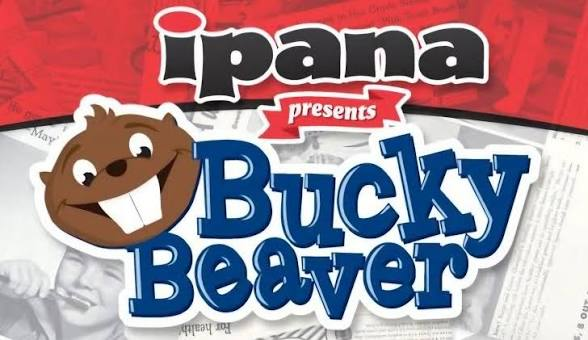
In other words, the Buc-ee’s mascot wasn’t born in a vacuum.
It was inspired by an existing cultural character and by Aplin’s own nickname and dog. The original Buc-ee’s beaver logo dates to 1982, around the launch of the first store in Lake Jackson, Texas. Aplin sketched the original concept himself and had it professionally finalized.
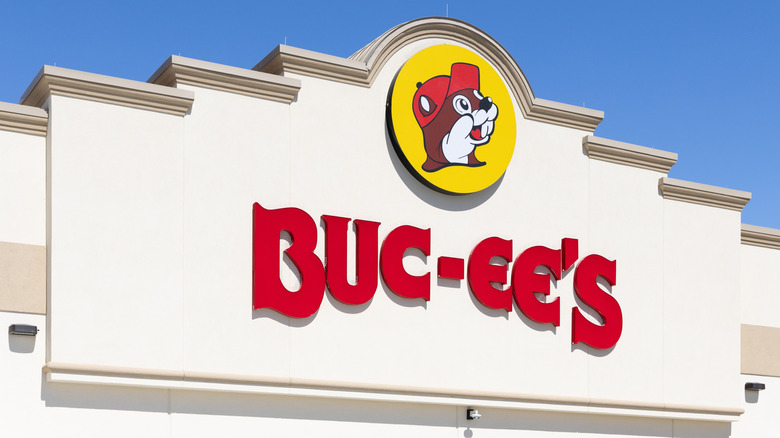
That history doesn’t invalidate Buc-ee’s trademark rights. It does, however, make the company’s later battles over other cartoon-animal logos particularly interesting from a design perspective.
A beaver is not a proprietary concept. Neither is a cartoon animal. Neither is a smile, a red hat, a circle, a yellow background, or the general concept of turning an animal into a friendly corporate mascot.
What makes a trademark distinctive is the combination and presentation of those elements in a particular commercial context. That’s where the debate begins.
The Pattern of Lawsuits
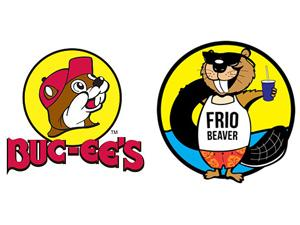
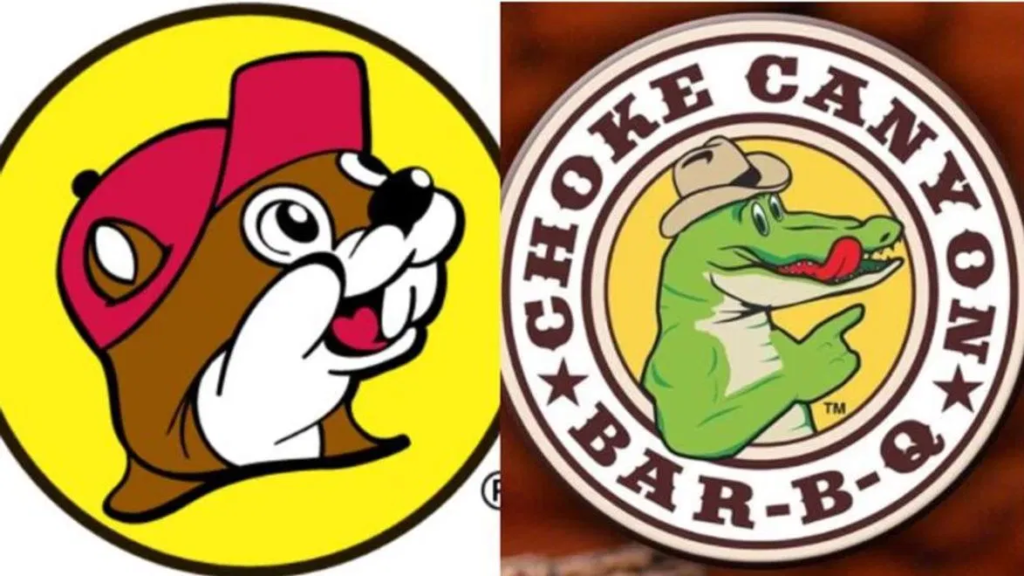
Buc-ee’s has spent years defending its brand against companies it believes are getting too close to its identity. In 2014, the company sued Texas convenience store chain Frio Beaver over a beaver logo. In 2016, it sued Choke Canyon BBQ, arguing that its alligator logo and use of the name “Bucky’s” infringed Buc-ee’s rights. The Choke Canyon case ultimately resulted in a judgment for Buc-ee’s, and the business changed its branding.
More recently, the disputes have continued as Buc-ee’s expands nationally.
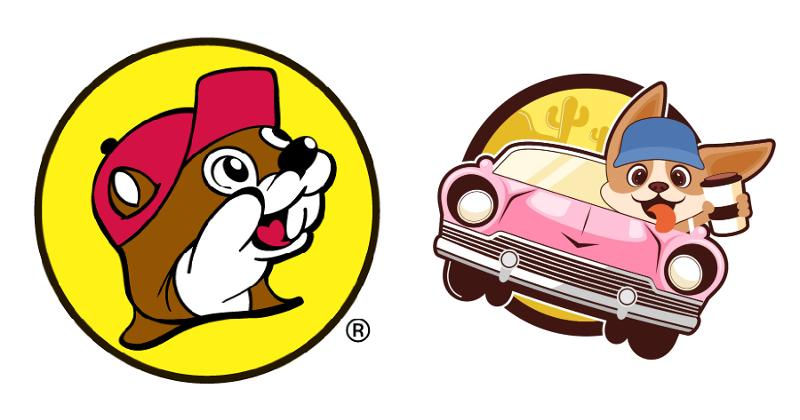
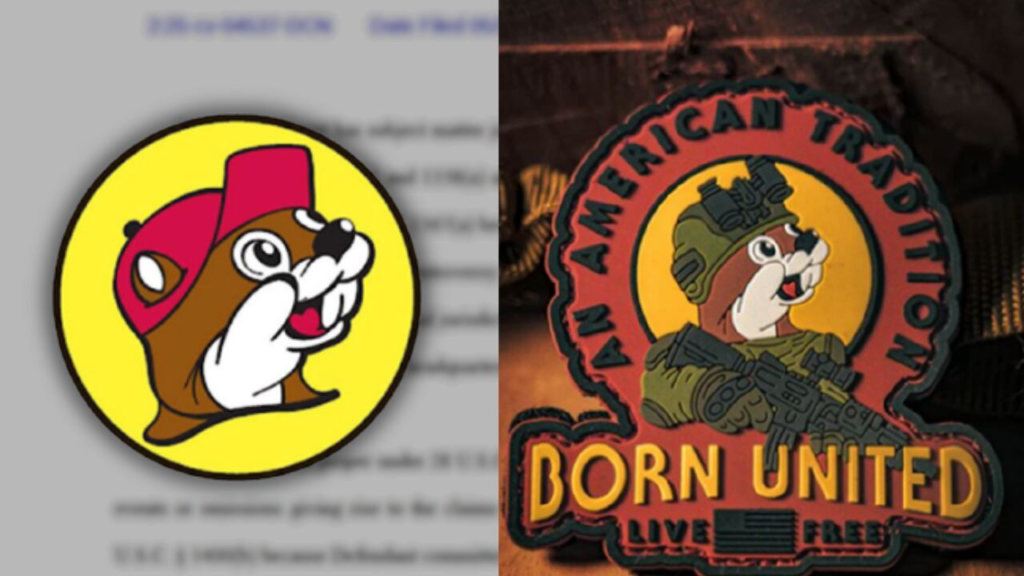
In 2025, the company sued Missouri business Barc-ee’s, arguing that its name and dog mascot were too similar to Buc-ee’s branding. That same year, Buc-ee’s also sued South Carolina apparel company Born United over a beaver design used for its “Tac-Bucc” merchandise.
Then came 2026.
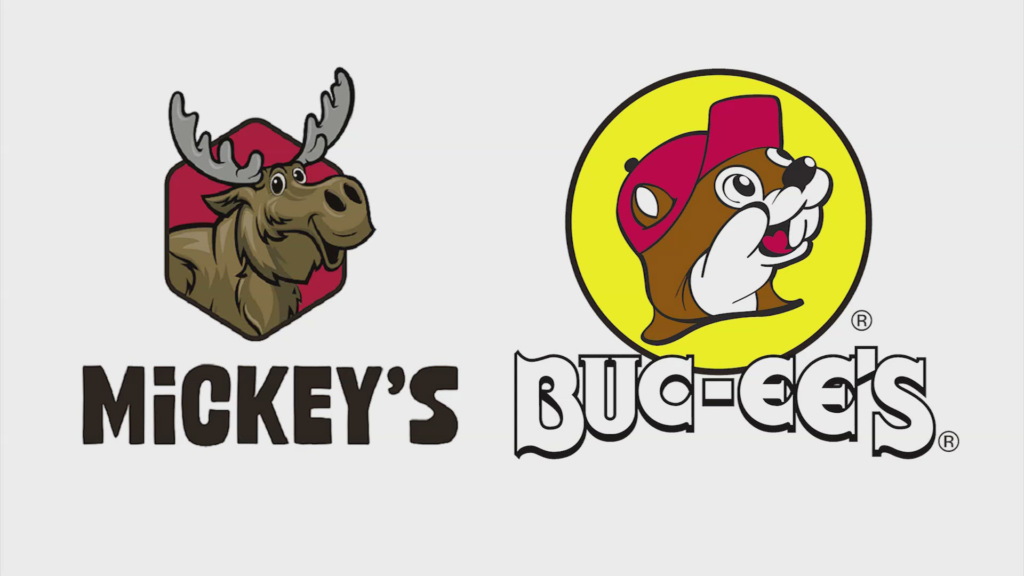
Buc-ee’s sued Ohio convenience store operator Mickey’s, formerly Mickey Mart, arguing that its smiling moose mascot and branding were too similar to Buc-ee’s beaver. The lawsuit alleges trademark infringement and unfair competition and seeks cancellation of trademark registrations.
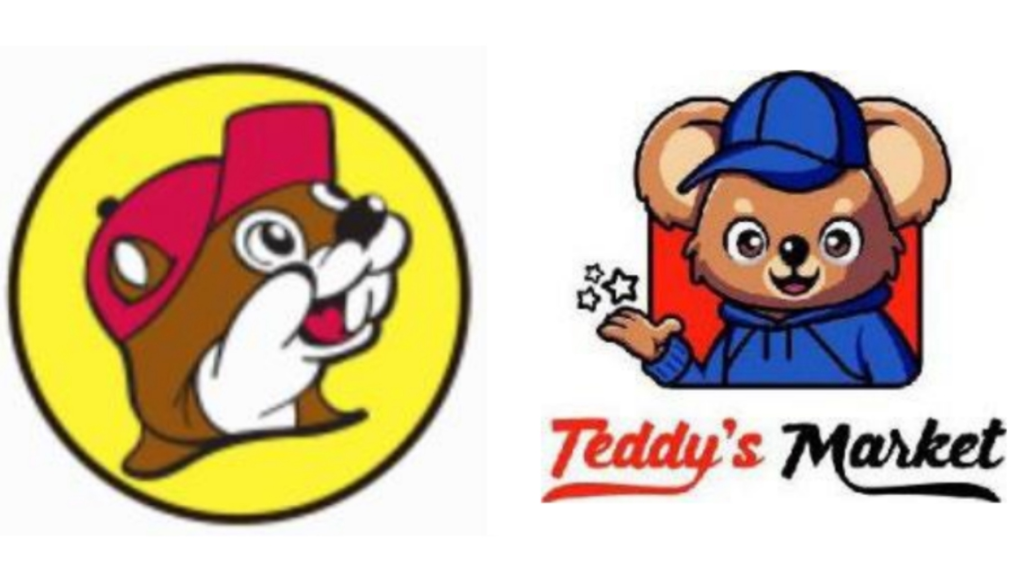
In May, Buc-ee’s sued Georgia convenience store Teddy’s Market, arguing that its anthropomorphic animal mascot, name, and branding were confusingly similar to Buc-ee’s. The complaint focused on numerous similarities, including the cartoon animal, facial characteristics, colors, and overall presentation.
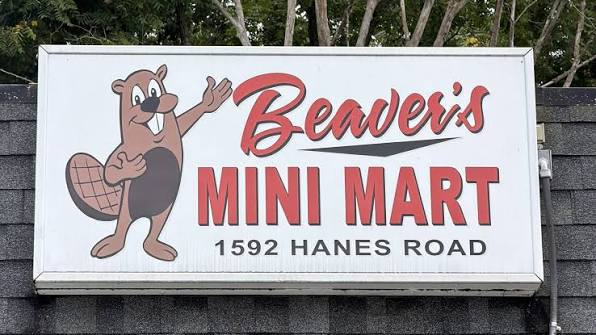
And now, perhaps the most publicly controversial dispute involves Beaver’s Mini Mart in Beavercreek, Ohio.
The Beavercreek Fight
Buc-ee’s recently filed a federal trademark lawsuit against Beaver’s Mini Mart, alleging that the store’s cartoon beaver logo is too similar to Buc-ee’s. The company points to characteristics including wide eyes, a smile, and red coloring and argues that the similarities could cause consumers to believe the businesses are affiliated.
The controversy is amplified by the location.
Beavercreek is, quite literally, a community whose identity is associated with the beaver. The city has historically used the animal as a symbol, and its city council recently passed a resolution recognizing the beaver as a historic community symbol amid the controversy.
The case has attracted national attention, including criticism from HBO’s Last Week Tonight with John Oliver, which has mocked Buc-ee’s approach to trademark enforcement and highlighted the company’s history of pursuing smaller businesses.

Whether Buc-ee’s ultimately prevails in each individual case is a matter for the courts. But the public reaction illustrates something important: people are beginning to question not simply whether a company can enforce a trademark, but whether it should use its resources to aggressively police similarities that many consumers may not perceive as meaningful.
The Problem for Designers
This is where the story becomes bigger than Buc-ee’s.
Designers live in a world built around visual references. Every designer understands that certain concepts are universal. Animals are used as mascots. Circles surround logos. Red communicates energy. Yellow communicates optimism. Cartoon characters create friendliness. Dogs, bears, birds, cats, foxes, wolves, moose, alligators, beavers and countless other animals have appeared in branding for decades.
No designer should be able to copy another company’s protected logo and simply call it inspiration.
But there is a huge difference between copying a logo and independently creating a similar type of visual.
That distinction is critical.
If a large corporation can threaten a small business because its logo contains a cartoon animal with certain facial characteristics or because its colors and composition happen to resemble an established brand, the practical effect can be frightening.
The small business owner may not have the money to fight. The designer may not have the money to defend the work. The easiest option becomes changing the logo. Not necessarily because the larger company is right, but because fighting is too expensive.
That’s Where Corporate Power Enters the Equation
This is the part that should concern the design community most.
A trademark dispute isn’t necessarily a battle between equals.
A national corporation can have attorneys who specialize in intellectual property, years of litigation experience, and substantial financial resources. A small business may have a local attorney, a designer who created the logo, and a limited budget.
Even before a case reaches trial, the imbalance can be enormous.
Legal fees accumulate. Business owners become distracted. Designers may have to redo work. Marketing materials have to be replaced. Signs may need to be changed. Websites, packaging, uniforms, merchandise, social media graphics and advertising campaigns can all become obsolete.
For a small business, the threat alone can be enough to force a settlement.
That’s why some designers and small-business advocates view aggressive trademark enforcement as a form of corporate bullying. The criticism isn’t necessarily that companies shouldn’t protect their intellectual property. It’s that the financial power to threaten litigation can sometimes become more consequential than the underlying merits of the design dispute.
Protecting a Brand Shouldn’t Mean Owning a Concept
There is nothing wrong with Buc-ee’s wanting to protect its distinctive beaver mascot. The company spent decades building recognition around it, and trademark law exists precisely to protect brands from confusingly similar commercial identities.
But there is a difference between protecting a particular trademark and attempting to control an entire category of visual ideas. If one company could effectively own the concept of a smiling cartoon animal, the implications would extend far beyond convenience stores.
What happens to the next designer who creates an animal mascot?
What happens when a client wants a cartoon bear inside a colored shape?
What happens when a small business independently develops a logo that happens to share characteristics with a famous brand?
These aren’t theoretical questions for designers. They’re part of the fundamental challenge of creating original work in a world where thousands of established companies already own trademarks.
The Design Community Should Be Paying Attention
The Buc-ee’s lawsuits are ultimately legal disputes, not design critiques. Courts will decide whether the specific similarities in each case create a likelihood of consumer confusion or violate other applicable rights.
But designers should still be paying attention.
The creative industry depends on the ability to explore familiar visual ideas and turn them into something distinctive. Designers shouldn’t copy other people’s work. They should research trademarks before developing identities. They should understand intellectual property law and conduct appropriate due diligence.
At the same time, designers shouldn’t have to work under the assumption that every common visual concept has already been claimed by a corporation with enough money to send a cease-and-desist letter.
There is a legitimate place for trademark protection.
There should also be room for creativity.
The Bottom Line
Buc-ee’s has built an extraordinarily recognizable brand, and protecting that brand is a legitimate business objective. But the company’s expanding history of trademark disputes raises a broader issue that deserves attention from designers and business owners alike.
When does protecting a trademark become an attempt to control a visual idea?
And what happens when the company on the other side of the dispute has a fraction of the money available for lawyers?
A designer can spend weeks developing a logo. A small business can spend thousands of dollars implementing it across its entire operation. Then a corporation can send a legal letter and force everyone involved to reconsider the work.
That doesn’t necessarily mean the corporation is wrong.
But it does mean the system isn’t operating on a level playing field.
The design community should be careful about celebrating aggressive trademark enforcement simply because it protects a famous logo. Intellectual property protection is important, but so is protecting the creative space in which designers work.
A company should be able to protect its brand.
It shouldn’t be able to own an entire idea.
And when the difference between those two things is decided by who can afford the better lawyers, the design community has every reason to pay attention.