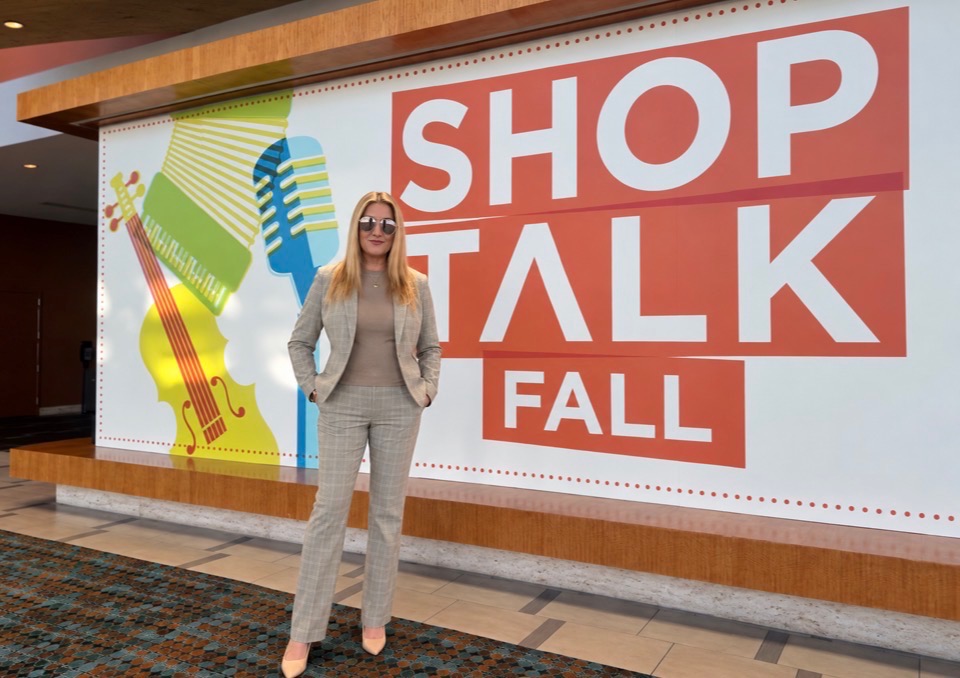
Shoptalk Fall brought retailers, brands and technology companies to Nashville from Sept. 29 through Oct. 1, giving the industry a welcome alternative to the familiar New York-and-Las Vegas conference circuit. The first Nashville edition showed why the choice made sense: the conversations did not have to end when the sessions did.
Nashville gave the conference its own rhythm
At Music City Center, Shoptalk paired its main program with smaller discussion formats, including workshops, town halls and Tabletalks. Beyond the venue, a walkable downtown offered places to continue talking over dinner or live music. That combination gave this fall gathering an identity of its own, rather than simply a new address. Shoptalk described Nashville as a first-time location for the event.
The setting mattered because a retail conference is not only a place to hear what companies plan to do. It is a chance to test those plans with people who face the same operational and customer questions. A city that makes it easy to move between the show floor and informal gatherings gives those discussions more room to develop.
Onstage, brands talked about identity and execution
Shoptalk reported more than 3,500 leaders, 150 speakers and 350 sponsors and exhibitors at its first Nashville edition. Its 2026 agenda stretched across store operations, customer insight, brand storytelling and new commerce tools. The range mattered: the question was not simply what technology can automate, but how a retailer stays recognizable as shoppers discover and buy in more places.
Tuesday’s mainstage brought together Hal Lawton, president and CEO of Tractor Supply; Tara Simon and Lisa Sequino of The Estée Lauder Companies; and Sara Foster, co-founder and co-CEO of Favorite Daughter. Lawton’s session was framed around serving a lifestyle and building lasting customer relationships. In a clip shared by Shoptalk, Sequino described how MAC turned a cultural moment into a store activation within days. Foster, in another organizer clip, made the case that a smaller creator with an engaged audience can drive more sales than a celebrity with vastly more followers. Both examples put speed and customer relevance ahead of sheer reach.
Wednesday shifted toward marketplaces and social commerce. StockX co-founder and CEO Greg Schwartz discussed the complexity of taking resale global, including differences among markets and changing trade conditions, in a Shoptalk session excerpt. Patrick Nommensen of TikTok Shop shared the mainstage with Comfrt founder and CEO Hudson Leogrande, while Glow Recipe co-founder and co-CEO Christine Chang rounded out the day’s featured talks. Together, the lineup showed how many routes now sit between a brand and its customer, from resale marketplaces to creator-led shopping.
Thursday’s mainstage featured Crocs brand president Anne Mehlman and chief marketing officer Carly Gomez, David’s Bridal CEO Kelly Cook and president and chief business officer Elina Vilk, and Equinox president Marc Mastronardi. Shoptalk’s closing recap described discussions of Crocs’ distinctive brand, David’s Bridal’s reinvention and Equinox’s expansion into a broader lifestyle proposition. Those are different businesses, but they presented the same strategic test: growth has to build on what customers already value.
The program offered more than keynote seats. Town halls, tactical workshops, Ask Me Anything sessions and Tabletalks created smaller forums; Shopwalks took attendees into Nashville stores. An invite-only B2B Exchange, developed with Master B2B, brought wholesale and professional buying into the conversation. These formats gave executives more ways to compare practical decisions with peers, even when the formal one-to-one meeting schedule did not deliver for everyone.
Breakout examples made the discussion more tangible. Vanessa Enns, vice president of integrated marketing at Merit Beauty, explained how the brand evaluates collaborations against goals such as customer acquisition and retention. She pointed to a partnership with The Ritz-Carlton that placed Merit products in guest rooms and club lounges, reaching a travel audience without turning the collaboration into the whole strategy. Beachwaver founder and CEO Sarah Potempa described a product shaped by her TikTok community’s requests: a cow-print collection that she said became the brand’s fastest TikTok sellout. These accounts showed how listening to customers can influence both product and distribution decisions.
The formal meeting program fell short for some
The disappointment was Shoptalk’s organized Meetup program. Its published guidelines set out up to 16 potential one-to-one meeting slots across three days. Those were opportunities to be matched, not a promise of 16 meetings.
Several people involved in the program reported receiving fewer than a handful of scheduled meetings. Some said their counterparts did not appear for meetings that had been confirmed. Walking the meeting floor, I saw attendees sitting alone at many tables. Those experiences are not a measure of the program as a whole, but they show the cost of reserving valuable conference time for an introduction that never happens.
Connections carried into the evening
Fortunately, the meeting grid was not the only way to build a relationship in Nashville. As often happens at conferences, much of the networking took place after hours, when conversations could continue without a 15-minute clock.
Nodus After Hours was part of that scene. The invitation-only gathering featured live music from members of the Zac Brown Band and gave attendees another place to connect away from the convention center. It was the kind of event that made Nashville feel integral to the conference, rather than a backdrop for it.
Disclosure: Nodus is a client of Inflection Point.
The takeaway from Shoptalk Fall’s move is straightforward: Nashville worked. The formal meeting experience deserves a closer look, but the city gave the industry a strong setting for the conversations that matter most—especially the ones that were never on a schedule.