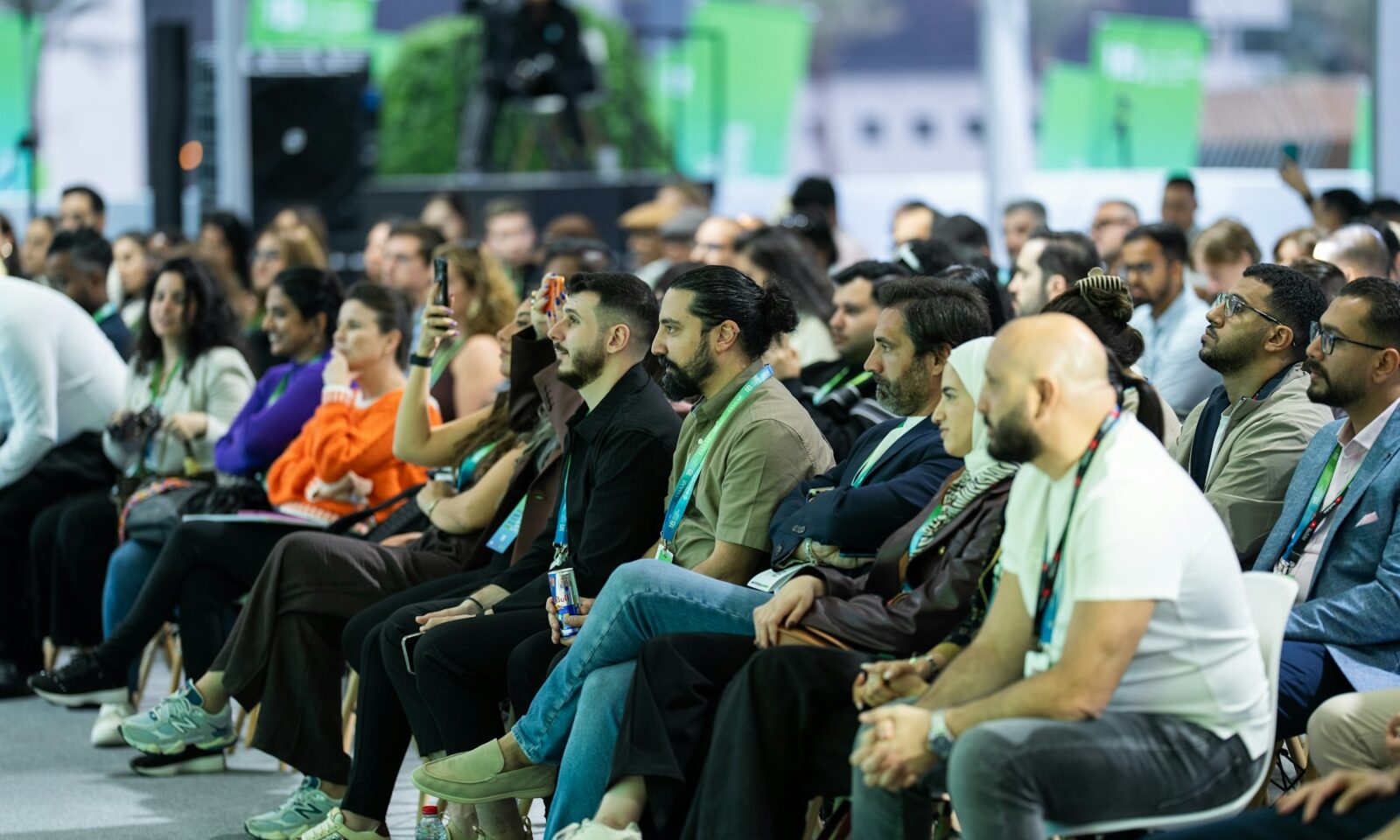
NASHVILLE, Tenn. — At Shoptalk Fall, held Sept. 29–Oct. 1, 2026, you could have played a fairly easy drinking game: Take a drink every time somebody said “AI,” “agentic” or “personalization,” and you probably would not have made it through the first morning.
That part was predictable. Artificial intelligence has become unavoidable at technology and retail conferences. What was more interesting was how the conversation changed. There was noticeably less fascination with what AI can do and more attention to what happens when companies actually depend on it.
Shoptalk billed the Nashville gathering as a three-day event for more than 3,500 retail leaders, with more than 150 speakers, 350 sponsors and exhibitors, and 20,000 prescheduled meetings. Those are organizer figures, not independently audited attendance or completed-meeting totals. The agenda covered stores, marketplaces, customer engagement and emerging technology, but AI ran through much of it. It no longer felt like a separate topic. Increasingly, it felt like infrastructure.
Agentic commerce makes bad data somebody else’s problem
Agentic commerce was one of the recurring ideas at the conference. Instead of a consumer searching websites, comparing products and eventually buying, an AI agent could participate in that process on the consumer’s behalf. That changes more than the interface.
Retailers have spent years optimizing digital commerce around getting a person onto a website or app. Search rankings, paid media, product pages, reviews, recommendations and conversion tactics all assumed there would eventually be a human looking at the screen. An AI agent does not necessarily shop that way.
It needs product information it can interpret, reliable inventory and pricing data, clear policies and enough context to determine which products deserve consideration. Incomplete or inconsistent information is no longer merely an ugly product page. It can affect whether a product enters the consideration set at all. Data quality becomes harder to dismiss as a back-office problem.
There was healthy skepticism about how quickly fully agentic shopping will arrive. In Coresight Research’s account of a Shoptalk panel, speakers called agentic storefronts overhyped for now because autonomous shopping agents account for relatively little conversion. But they did not argue for ignoring the channel. Clean product data, reliable feeds and better governance are useful regardless of how quickly autonomous shopping takes off.
Companies have spent years trying to remove friction from the customer journey. Now they must consider a journey in which the customer delegates part of it entirely. The retailer still has to earn the sale. It may simply have to convince a machine first.
The AI strategy is becoming an operations strategy
This was my biggest takeaway from Shoptalk Fall. The companies best positioned for the next phase of AI may not be the ones with the flashiest demonstrations. They are the ones doing the operational work required to make the technology useful.
That means clean data, clear ownership, defined permissions, reliable integrations, governance and measurement. It also means knowing where human judgment belongs. None of those things looks particularly exciting on a conference stage, but they determine whether an AI initiative becomes part of the business or remains an experiment shown at a quarterly meeting.
One example showed how quickly the mundane can become consequential. Corinne Baker, senior vice president of e-commerce, direct-to-consumer and marketplaces at RG Barry Brands, described an automated pricing run across roughly 1 million SKUs that failed to account for empty margin cells. Products priced at $400 sold for $50, leaving thousands of orders unfilled, according to Coresight’s report of her remarks.
The lesson is not that automation cannot work. It is that automation acts on the data and controls it is given, including at a scale that can make a small error very large, very quickly.
The same distinction applies to agentic commerce. There is a significant gap between saying an AI agent can purchase something and building systems that let it do so reliably at scale. Retailers need to know what an agent can access, which information it can trust, what actions it can take and what happens when something goes wrong. Brands need product information machines can understand without sacrificing the identity that makes humans want the product in the first place.
The technology is advancing quickly enough that organizational readiness is becoming the constraint.
Human judgment did not disappear
For all the AI discussion in Nashville, another theme kept appearing alongside it: authenticity. It surfaced in conversations about creators, communities, loyalty and physical stores.
Favorite Daughter co-founder and co-CEO Sara Foster said a Dallas creator with about 60,000 followers sells more product for the brand than an A-list celebrity, as Digiday reported from the conference. Her example cuts against the assumption that reach is the same thing as influence. The biggest audience does not necessarily produce the strongest relationship.
Glow Recipe co-founder and co-CEO Christine Chang discussed responding quickly to cultural moments and treating other brands in a category as part of a broader community, rather than automatically treating every interaction as competition. A conference wrap-up described Glow Recipe’s response to a shared eye-patch trend and a joint live event with Huda Beauty.
Physical retail told a similar story. Ulta Beauty Chief Retail Officer Amiee Bayer-Thomas said about 80% of the company’s sales still run through more than 1,500 stores, according to the same wrap-up. Her argument was not that digital commerce matters less; it was that stores remain a growth engine and provide human expertise, empathy and connection.
Crocs offered another version. Brand President Anne Mehlman described customers spending as long as 45 minutes customizing shoes at Jibbitz bars in some markets. The company has also introduced a China store format built around personalization. Those examples may seem unrelated to AI, but they address the same problem from the other direction.
As technology makes content, recommendations and commerce easier to automate, genuine affinity becomes more valuable. AI can make a company faster. It can analyze customers, generate content, personalize experiences or eventually execute parts of a purchase. What it cannot manufacture nearly as easily is the reason somebody cares about one brand instead of another.
The experiment phase is ending
There is still plenty of hype around AI, and some predictions surrounding agentic commerce will prove too aggressive. Every technology cycle produces ideas that arrive later than expected, differently than expected or not at all. But waiting for the hype to settle is not much of a strategy either.
The important shift at Shoptalk Fall was that the conversation increasingly started after the demo. What data does the system need? Who owns it? How does a brand remain visible when discovery changes? What happens to loyalty when an agent participates in the decision? Where does human review belong? How do companies move quickly without surrendering control of their brand or customer relationship?
Those are operational questions, not theoretical ones. They are also the clearest indication that AI in retail is entering a more consequential phase. The technology itself is becoming less interesting than the systems companies build around it.
For the past few years, businesses have asked what AI can do. The better question now is whether the organization is ready when it does it.