When I think back on that day, 25 years ago, my brain inevitably first flashes back to midday September 9. It was the last day of the cruise I had taken, and I was remember vividly sitting on the lido deck with my friend Erica, soaking in our last day of sunshine, feeling my skin bake and staring out at water that was the deepest shade of blue I remember seeing. It was the last day of pure calm I felt for many months.
And then my brain flashes to the automated recording:
“All circuits are busy now. Please try your call again later.”
I must have heard that message 100 or more times on 9/11, desperately trying to check in with friends who were at NYU and living and working in New York City.
I remember getting a call that one friend we still hadn't heard from had suddenly appeared in U2's Walk On tribute video. There she was at 3:01, handing out supplies at the Pile. I still remember the relief of seeing her face.
I had big plans to sleep in that morning. My first class wasn't until 1 pm. I had flown home into Newark Airport the night before, exhausted after that weeklong cruise, not ready to get back to reality.
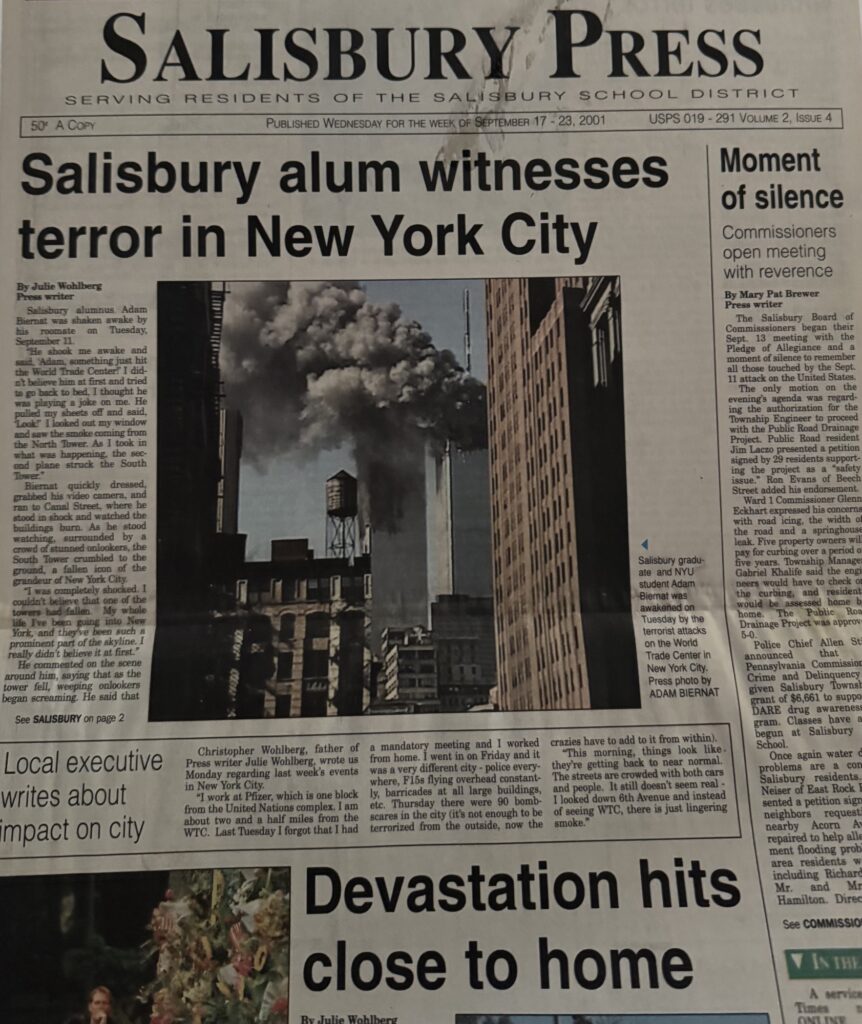
I remember my father shaking me (a journalism major and writer for the local community paper) awake that morning and telling me a plane had just hit the World Trade Center, and watching first in confusion as the smoke billowed out of the building on CNN — how could any pilot miss all that open airspace and hit the tower? — then in horror as the second plane struck and reality hit us: this was not an accident.
By the time the third plane hit the Pentagon and the fourth crashed in Shanksville, I think we were all in a numb state of shock. It was so far beyond anything we understood as reality that it felt like a bad Hollywood disaster movie, not a news broadcast.
9/11 was only the second major news story I had ever covered, the first being Columbine two years earlier. I was still studying journalism in college and writing for the local paper. Stories like these — and the difficulty of covering them — ultimately pushed me away from hard news and toward features.
Days later, those who had been stranded in Manhattan made their way home by bus, and we gathered at the local coffee shop, Hava Java.
One by one, my friends arrived with the same thousand-yard stare. They sat down without the hugs and physical affection that normally came so naturally to us. I stayed seated too, perhaps afraid that touching them would somehow break the fragile composure they were holding onto.
We didn't say much.
But together, we exhaled.
Weeks later, I traveled to Manhattan for the first time since the attacks. Missing-person flyers were everywhere. The wall of posters at Union Square Station was so overwhelming I had to turn away.
But the family members — those I couldn't turn away from.
The desperate faces of people who were hanging flyers, showing photos to passersby, clinging to the hope that their loved ones were going to come home. And so we absorbed a bit of each of their pain as we passed by.
I was a film critic at the time, and the following year, The Guys came out. To date, I think it's the only 9/11 movie that does actual justice to the events of that day and to the aftermath. Perhaps because so much of the footage is authentic — scenes of Sigourney Weaver wandering the city and talking to firefighters are real footage, not scripted.
It brings attention to the true heroes from that day rather than glorifying the violence and gore.
The film doesn't dwell on images of destruction. One of the few images of the Towers' impact is silent security footage: papers suddenly begin floating across the frame and littering the street as firefighters jump onto their truck and head out to answer what would become their final call.
A particular scene from that movie stands out to me. It's a scene where Sigourney, acting as a journalist helping a fire captain eulogize his men, contemplates a question he asked her while they were writing:
“Are you okay?”
Then the film jumps to Sigourney, seated at her desk, contemplating the answer to that question in one of the most accurate monologues about Americans living in post-9/11 America:
“Are you okay? That's what we all kept asking each other the rest of September. What is the answer? The pebble is dropped in the water. The point of entry is you. Yourself. Were you present at Ground Zero, and wounded, suffocated, or covered in white ash? No. I guess you're okay. The first ring around the pebble: Is your family okay? Did you lose someone in the Towers or on the planes? The next ripple: friends. Are your people okay? Next ripple: If someone died in the Towers who you had dinner with once and thought was a really nice person, are YOU okay? Next: If you look at a flyer of a missing person on the subway and you start to lose it, are you okay? If all the flyers are gone one day...they're...gone...are you okay? Is anyone okay?”
Twenty five years later, we have the answer to that question.
Those of us who lived through that day are now explaining to the generation that came after what that day signified, how stark the before and after was.
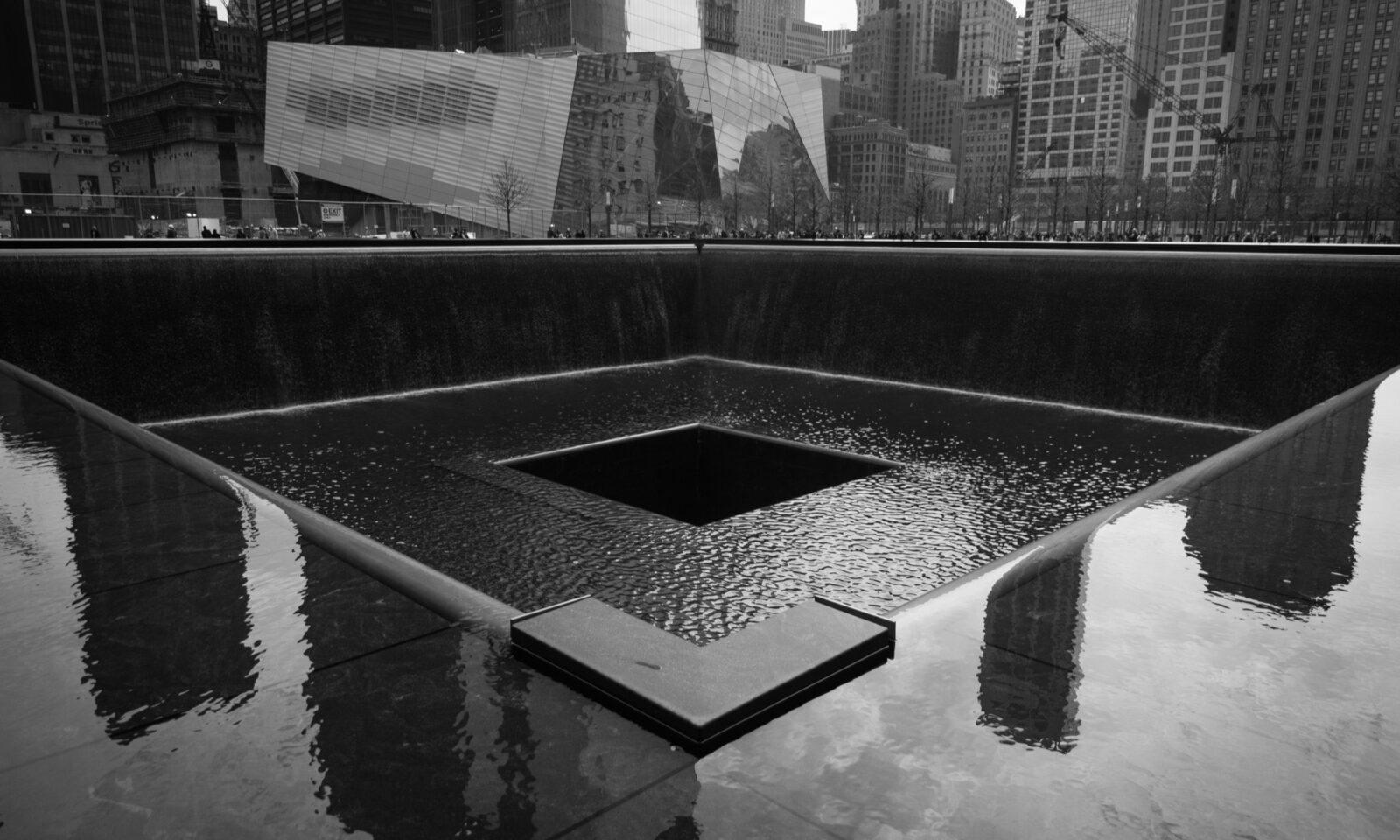
The flyers have come down. The Freedom Tower has been built.
But for those of us who lived through it, some part of us will always be patched together around that day.
And while we may be okay, we will never forget.