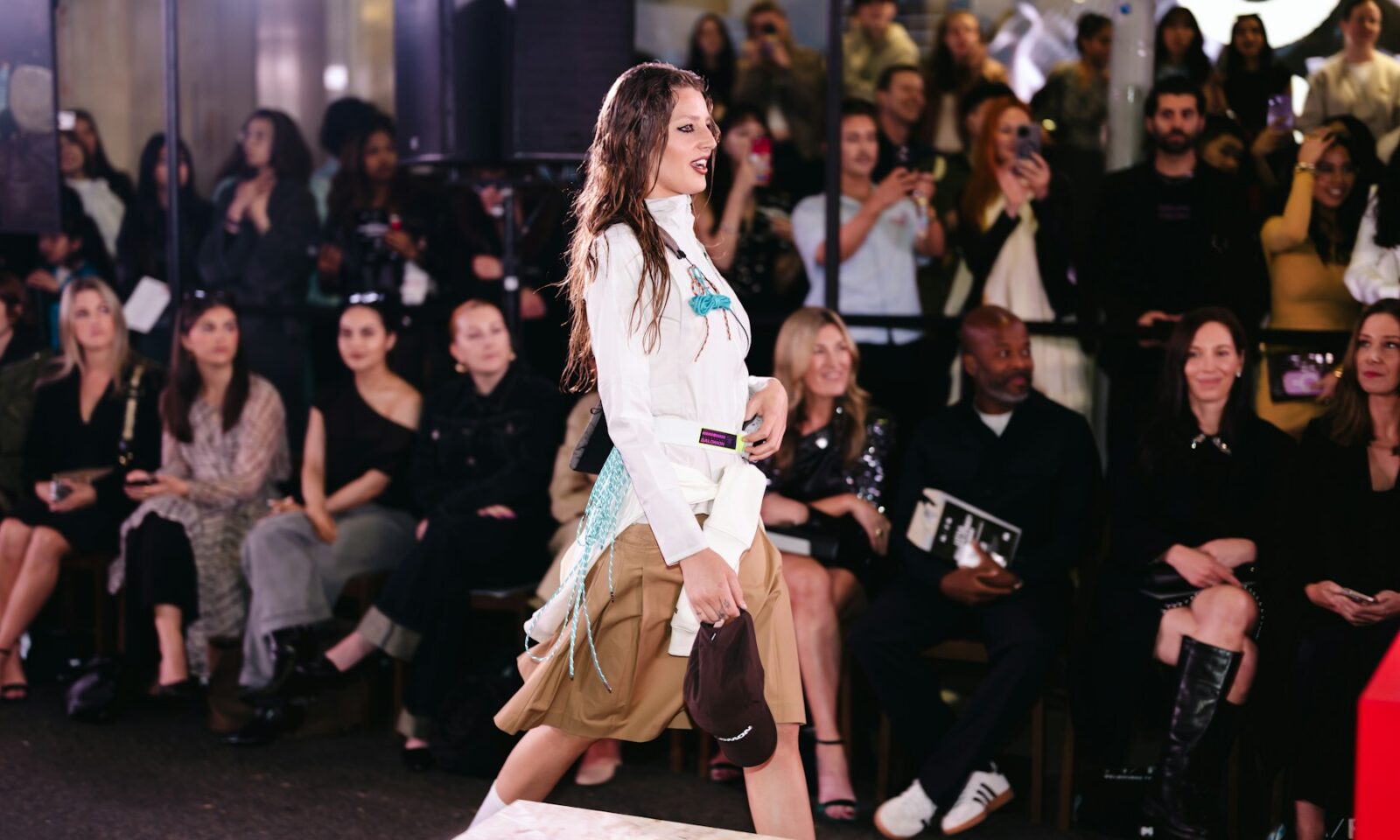
Rapid News Brief: Marks & Spencer made its London Fashion Week debut on Sept. 18 with a “see now, buy now” collection that moved from the runway to its online store and selected flagships immediately, turning a centennial brand moment into a live retail test.
The British retailer used womenswear and menswear developed by its in-house teams, with references drawn from the M&S Archive. The company said half the collection is priced below £50 and that the range is also available internationally through selected channels, including its Zalando partnership.
A heritage event doubles as a commerce launch
M&S said the show marks 100 years since it began selling clothing in 1926. The collection was presented at London’s Design Museum and made available through M&S.com and 10 flagship stores in the United Kingdom and Ireland.
The immediate-sale model removes the traditional delay between a runway presentation and a product launch. It also lets M&S measure whether attention generated by the event converts into product views and purchases while the collection is still culturally current.
The runway supports a broader retail reset
Reuters independently reported that M&S is using the event to broaden its appeal at home and abroad, both online and in stores. The company said it held 10.2% of the fashion market in its 2026 fiscal year and recorded 16% year-over-year growth in shoppers under 35. Those are company-reported measures.
The Independent previously confirmed the planned debut and its immediate-shop format as part of the retailer’s style revival.
The business test starts after the show
M&S says it wants to double online sales profitably while modernizing its supply chain, data capabilities and stores. The Fashion Week event gives that strategy a visible consumer moment, but commercial performance will depend on inventory, fit, fulfillment and repeat demand after the initial attention fades.
For retail leaders, the significance is the integration of brand storytelling and transaction design. M&S is not treating the runway as a distant image campaign; it is making the products available at the point of maximum interest. The result will show whether a mass-market heritage brand can use an elite fashion platform without losing its value position.