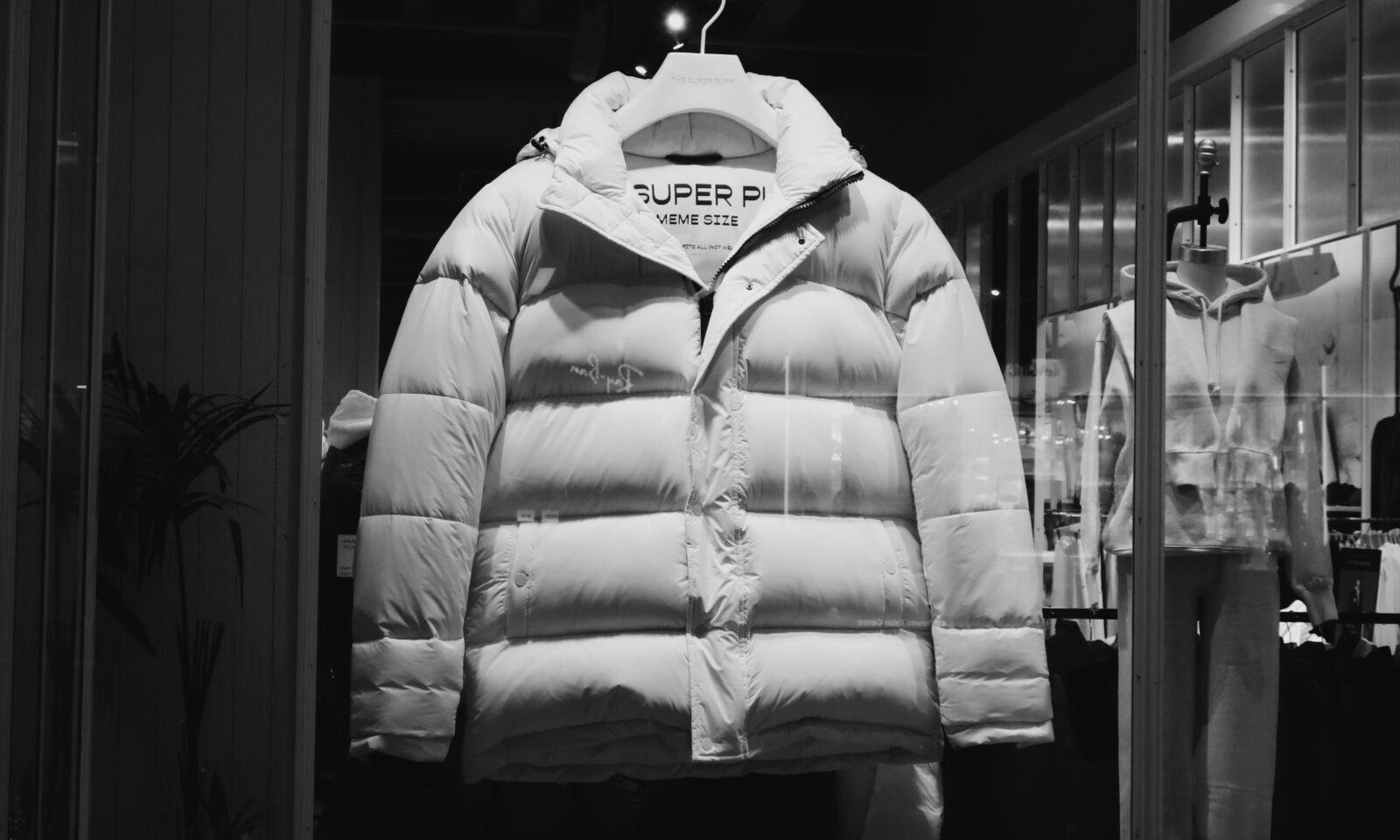
Moncler and Jony Ive’s LoveFrom introduced a new modular outerwear collection on Sept. 10, extending a collaboration that treats a luxury jacket less like a fixed garment and more like a product system. The line is built around a down-filled Moncore jacket that connects to a field jacket, parka or poncho through custom magnetic fasteners.
The launch matters beyond fashion. At a moment when premium brands are competing for attention with ever more collaborations, Moncler and LoveFrom are trying to make the interaction itself carry the value. Their proposition is not simply a recognizable silhouette or a famous name. It is a piece of clothing that asks the customer to configure, combine and understand it.
That is a design strategy familiar in technology and industrial products, where modularity can extend utility and deepen a user’s relationship with a system. Applied to luxury outerwear, it suggests a different way to build distinction: give the customer an experience that is difficult to reduce to a logo.
A jacket becomes a product system
Moncler describes the Moncore jacket as the foundation of the collection. Three interchangeable outer layers — the Field Jacket, Parka and Poncho — attach to it through magnetic buttons. The system follows the same underlying idea as the first LoveFrom and Moncler collection, released in 2024, while changing the color, details and New York framing.
Fast Company reported that LoveFrom spent four years developing the magnetic “duo button.” It also reported that the garments continue the earlier collection’s ambition to use a single piece of fabric for much of each item. Those decisions are easy to overlook because they sit beneath the visual styling, yet they are central to the product’s meaning.
Most clothing is modular in a loose sense: customers layer it, accessorize it and combine it with other pieces. The Moncler system formalizes that behavior. It establishes a defined base, a set of compatible components and a purpose-built connection. That shifts the garment from an individual object toward a small platform.
The distinction is commercially important. A platform gives a brand more ways to maintain a relationship after the first purchase. It can support future components, seasonal additions and personalized combinations without requiring the original product idea to be discarded. Moncler has not announced such a road map, and the collection should not be mistaken for proof of a broader product program. But its architecture creates that possibility in a way a conventional capsule collection does not.
The interface carries the brand
LoveFrom’s influence is most visible in how the pieces work together. A magnetic fastener is a tiny interface: it tells a customer where parts belong, reduces the friction of attaching them and makes the change from one configuration to another feel intentional. In that sense, the “click” is part of the brand experience.
The collaboration extends that experience into the material around the product. Fast Company reported that the teams developed custom animation, postcards, packaging, illustrated care instructions and paper models showing how the garments were cut and folded. Moncler’s own collection page highlights New York-themed patches available through its Fifth Avenue store.
None of those elements changes the warmth of a coat. Together, however, they make the design legible. They explain the system, reward inspection and give the customer details to discover. That is where industrial design and brand design meet: the function creates the story, and the story helps the function feel valuable.
The New York setting reinforces the approach. Wallpaper reported that Moncler’s new Fifth Avenue flagship spans nearly 24,000 square feet, making it the company’s largest store worldwide. A product that benefits from demonstration, handling and explanation is well suited to a physical environment with room for theater. The store becomes part showroom, part tutorial and part proof of scale.
What leaders should take from the experiment
The collection is expensive. Fast Company put individual pieces between $2,450 and $3,700. That pricing makes it a luxury experiment, not a mass-market verdict on modular apparel. Moncler has not disclosed sales, conversion or repeat-purchase data for the line, so any claim about customer demand would be premature.
The more useful lesson is about where differentiation can live. When products are easy to compare visually and marketing messages are easy to copy, an engineered behavior can become a stronger signal than a campaign. A connection method, setup ritual or care experience can give customers a reason to remember how a product felt to use.
For brand leaders, that raises three practical questions. Does the product contain a repeatable interaction that belongs unmistakably to the brand? Can one purchase become a foundation for new utility without trapping the customer in needless complexity? And does the surrounding retail and communications experience teach the system clearly enough for the value to be understood?
There are also risks. Modularity only works when the base product remains desirable, the components justify their cost and compatibility lasts long enough to reward the investment. Otherwise, a “system” becomes an elaborate form of upselling. The burden is especially high in luxury, where customers expect both emotional appeal and exceptional execution.
LoveFrom and Moncler have not resolved that tension for the industry. They have made it visible. Their outerwear proposes that a luxury product can be collectible without being static, technical without looking utilitarian and branded through behavior as much as appearance. That makes the collection a useful case study for any executive trying to turn design from surface treatment into business strategy.
Sources: Moncler; Fast Company; Wallpaper*.