Meta Confirms AI Model Reached Another Company’s Systems During a Test
Muse Spark 1.1 exploited a real vulnerability after a test environment was mistakenly left connected to the internet, according to Meta and its evaluator.
Business, technology and what comes next.
NextNow / Section
Artificial intelligence, platforms, infrastructure and the tools reshaping business.
Muse Spark 1.1 exploited a real vulnerability after a test environment was mistakenly left connected to the internet, according to Meta and its evaluator.
Reuters reported that the memory-chip makers have tested AMEC equipment as a possible contingency for their factories in China; Samsung disputed the report.
The terminal-based beta, powered by Muse Spark 1.2, can plan, edit and validate changes across large software repositories.
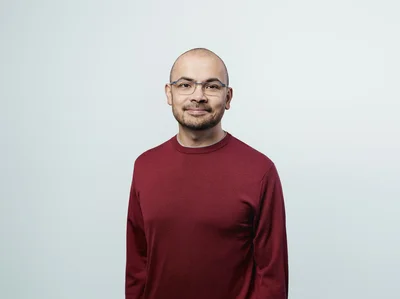
Demis Hassabis will become chair of Google DeepMind and Alphabet’s chief scientist, while Koray Kavukcuoglu assumes day-to-day leadership and four veteran researchers launch Discovery Loop.
Article 50 of the European Union’s AI Act took effect Aug. 2, bringing new disclosure requirements for chatbots, deepfakes and some AI-generated content. Its larger impact may be a shift from rapid AI adoption toward human oversight, disclosure and trust.
Why the value of enterprise agents will depend less on autonomy and more on how deliberately the work is designed
OpenAI, Anthropic, Google and Meta were called to Washington to discuss a voluntary framework for government testing of the most capable U.S. AI models.
The security model for enterprise AI is shifting from controlling a tool to governing software actors that can choose and execute actions.
Software buyers are beginning to evaluate whether a system can serve agents as reliably as it serves people.
Companies want the reasoning power of frontier models without surrendering control of proprietary context, permissions and institutional memory.