The viral version of the story is almost irresistible: China put artificial intelligence servers on the ocean floor, cut cooling energy by 90% and saved more than 100,000 tons of freshwater in a year.
Most of that story is rooted in real engineering. The problem is that the numbers have been compressed into a cleaner narrative than the evidence supports.
China does operate commercial underwater data-center infrastructure. In Hainan, capsule-like modules have been running about 35 meters below the surface for nearly three years, according to People’s Daily. The operator says the first phase, at full capacity, can save about 3.4 million kilowatt-hours of electricity and 26,000 tons of water annually compared with a land-based facility of the same size.
The much larger figure now circulating online — 122 million kilowatt-hours of electricity and 105,000 tons of freshwater per year — comes from projections for the planned 100-module Hainan complex once fully built out. It was reported when the project was still being assembled, not as a measured result from a completed year of operation.
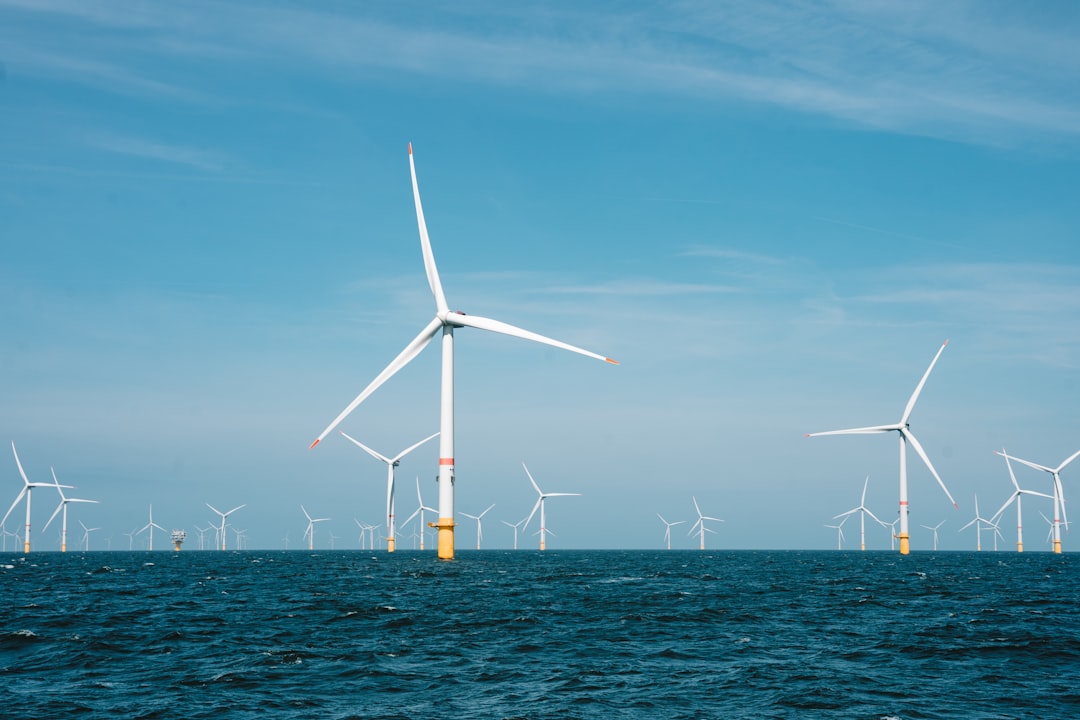
China has since gone further. A 24-megawatt project off Shanghai entered operation in May and directly pairs submerged data modules with offshore wind. Shanghai officials say the design cuts total electricity consumption by 22.8%, eliminates freshwater cooling and uses more than 90% less land than a comparable conventional facility. Cooling, which can consume roughly a third of electricity in a traditional data center, is expected to fall to about a tenth of total power use in the undersea design. The project is explicitly aimed at AI-intensive workloads.
Those are not trivial gains.
They also do not answer the more difficult question.
If underwater data centers work, should we build them at scale?
The ocean does not make the heat disappear
Every watt of electricity used by computing ultimately becomes heat. On land, companies spend electricity and often freshwater moving that heat away from servers. Put the same equipment underwater and cold seawater becomes an extraordinarily effective heat sink.
From an engineering perspective, that is elegant.
From an environmental perspective, it changes where the externality goes.
A conventional cooling tower consumes water that can be counted. A chiller consumes electricity that appears on a utility bill. Heat transferred into seawater is harder to see on a balance sheet, but it still enters an ecosystem.
The meaningful question is not whether a few underwater data centers could noticeably warm the global ocean. At foreseeable deployment levels, that framing is more dramatic than useful.
The relevant question is whether persistent local thermal discharge changes the biological conditions around concentrated installations, particularly as those installations scale.
There is reason to take that seriously. A 2024 systematic review in Frontiers in Marine Science examined 58 studies of thermal and cold discharge from coastal power plants. The researchers found that higher temperature differentials were associated with declines in benthic abundance and that thermal discharge frequently altered biodiversity, community structure, dissolved oxygen, pH and sediment conditions.
That research did not study underwater data centers. The scale, flow patterns and heat-discharge designs are different.
But it establishes an important principle: seawater is not biologically indifferent to added heat.
One module is not 100 modules
China’s Hainan operator says monitoring has found water temperatures within 2 meters of its modules rise by less than 1 degree Celsius after heat exchange. The company also reports fish gathering around the structures.
Those observations are useful. They are not proof that indefinite scaling is ecologically neutral.
Artificial structures often attract marine life. That can create habitat. It can also redistribute animals, alter predator-prey interactions or favor some species over others. Seeing fish around an installation tells us that fish are present. It does not, by itself, tell us what happened to the broader ecosystem.
Scale is the variable that should concern us most.
One module surrounded by moving water is different from 100 modules. A 24-megawatt project is different from a future offshore computing district measured in hundreds of megawatts. Heat that disperses easily at one site and one density may accumulate differently when installations are clustered.
Current speed matters. Season matters. Baseline water temperature matters. Depth matters. Salinity and dissolved oxygen matter. So does the composition of life on the seafloor itself.
Environmental thresholds are local. A species does not experience the average temperature of the Pacific Ocean. It experiences the water surrounding it.
Coral reefs are not the source of half our oxygen, but they are still a warning
There is one point worth correcting because it often appears in arguments about ocean warming.
Coral reefs do not produce half of the oxygen humans breathe. NOAA estimates that roughly half of Earth’s oxygen production comes from the ocean, but most of that production comes from phytoplankton, algae and photosynthetic bacteria.
Coral reefs matter for another reason that is just as consequential.
They occupy less than 1% of the ocean floor while supporting about 25% of marine species, according to NOAA Fisheries. They protect coastlines, support fisheries and provide nursery habitat for complex marine ecosystems.
They are also exquisitely sensitive to temperature.
That does not mean the existing Chinese projects are sitting on coral reefs, nor should we imply that they are. It means site selection matters enormously if underwater computing expands into tropical and subtropical coastal zones already experiencing heat stress.
Adding a small local temperature increase to a robust, fast-moving environment may have little measurable effect. Adding the same increase to organisms already living near their thermal limit may be a different proposition entirely.
The responsible standard should therefore be baseline ecological study before deployment, not merely temperature monitoring after the servers arrive.
We do not know what much of the seafloor contains
Today’s commercial projects are shallow-water installations. Hainan sits at about 35 meters. The Shanghai project is also coastal infrastructure, not a deep-sea data center.
That distinction matters because concern about destroying unknown abyssal ecosystems would overstate the evidence around these specific facilities.
But commercial success has a way of expanding technological ambition.
If underwater computing becomes economical, companies and governments will look for more sites. Some will be deeper. Some will be farther offshore. Some will be in ecosystems that have barely been surveyed.
Our knowledge gap is enormous. NOAA Ocean Exploration says humans have visually observed less than 0.001% of the deep-ocean seafloor. Scientists estimate there may be 700,000 to 1 million ocean species, excluding most microorganisms, and roughly two-thirds may still be undiscovered or undescribed.
That should not become an argument against all marine infrastructure. Subsea cables, offshore wind, pipelines and scientific installations already operate in the ocean.
It should become an argument for humility.
We should know what lives in a place before we industrialize it whenever reasonably possible.
The maintenance problem may be as important as the environmental one
There is another reason not to assume that underwater computing becomes inevitable simply because cooling is efficient: servers break, hardware ages and AI chips become obsolete quickly.
Microsoft already ran a sophisticated version of this experiment. Its Project Natick placed a sealed data-center module underwater off Scotland. Technically, it worked remarkably well. Microsoft reported that its underwater servers failed at one-eighth the rate of a comparable land-based control group and designed the system to operate for up to five years without maintenance.
That sounds like a powerful endorsement until the economics enter the picture.
Reuters reported in April that Microsoft ultimately abandoned underwater data centers after the project met its technical targets because client demand was weak and the economics did not work. Industry specialists cited the cost of deployment and a basic limitation of sealed modules: they cannot be cheaply expanded, repaired or upgraded.
That limitation matters more in the AI era than it did when Project Natick began.
AI hardware cycles are fast. A facility designed to remain sealed for five to seven years may be physically reliable while becoming economically outdated much sooner. Pulling a module from the seafloor, returning it to shore and replacing hardware is a different maintenance model from swapping racks in a conventional data center.
Saltwater also creates its own engineering demands. External structures face corrosion and biofouling. Subsea power and fiber connections must survive anchors, fishing activity, storms and ordinary marine wear. Repairs require specialized vessels, equipment and personnel.
Cheap cooling does not automatically mean cheap computing.
The strongest case for underwater data centers is also the reason to scrutinize them
It would be easy to dismiss this idea on environmental grounds simply because industrial servers seem as though they do not belong on the seabed.
That would be too easy.
Land-based data centers have environmental consequences, too. They occupy land, increase demand on electrical grids and, depending on cooling design and geography, can consume large quantities of freshwater. Those burdens are increasingly visible in communities being asked to host AI infrastructure.
If an underwater facility powered by offshore wind can materially reduce grid demand, eliminate freshwater cooling and operate without significant ecological harm, it could be preferable to the land-based alternative in some locations.
The comparison cannot be underwater data center versus untouched nature.
It has to be underwater data center versus the infrastructure we would otherwise build to provide the same computing capacity.
That is why the Chinese projects deserve serious attention rather than reflexive praise or alarm.
They are testing a potentially valuable infrastructure model.
What they have not yet demonstrated is that the model remains environmentally and economically superior when deployed at the scale the AI industry may eventually demand.
At scale, the rules should change
If underwater data centers remain niche installations in carefully selected environments, their environmental footprint may prove manageable.
If they become a major category of AI infrastructure, the standard should be higher.
Large projects should require independent ecological baselines before installation; continuous monitoring of temperature, dissolved oxygen and benthic communities; exclusion zones around coral reefs and other sensitive habitat where the evidence warrants them; cumulative-impact modeling for clusters of modules rather than module-by-module review; transparent heat-discharge data; and credible plans for retrieval, failure, decommissioning and restoration of the seabed.
Lifecycle accounting should also include the steel, cables, marine vessels, installation, maintenance and eventual retrieval of the system. An energy-efficiency number that measures only the cooling electricity saved can miss costs that occur elsewhere.
Because that may be the larger lesson here.
We tend to measure efficiency at the point where the company pays the bill.
Nature keeps a larger ledger.
China’s underwater data centers could prove to be one of the more intelligent responses to AI’s growing appetite for electricity, water and land. They may also prove to be a technology that works beautifully in some places and makes little sense in others.
The engineering question — can we put powerful computing systems under the sea and keep them running? — has largely been answered.
We can.
The harder question is whether we can scale that achievement without turning the ocean into infrastructure first and studying the consequences second.