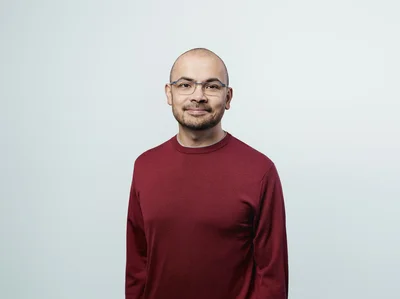
MOUNTAIN VIEW, Calif. — Google is reorganizing the leadership of its central artificial intelligence unit as Demis Hassabis moves out of day-to-day management and four veteran researchers, including longtime chief scientist Jeff Dean, leave to form a new company.
Hassabis will become chair of Google DeepMind and chief scientist of Alphabet, Google’s parent company. Koray Kavukcuoglu, the unit’s chief technology officer and Google’s chief AI architect, will take responsibility for daily operations as senior vice president of Google DeepMind, according to a company announcement Wednesday.
The new structure puts Kavukcuoglu in charge of Gemini model development, frontier AI research, and the Gemini application and developer teams. He will report to Google and Alphabet CEO Sundar Pichai.
Hassabis will remain closely involved in long-term AI strategy and research while continuing to lead Isomorphic Labs, Alphabet’s AI drug-discovery company. The move is a change in operational control rather than a departure from Google.
Four senior researchers form Discovery Loop
At the same time, Dean is leaving Google after 27 years to start Discovery Loop, a company focused on using AI to accelerate scientific and engineering discovery. He will be joined by Sanjay Ghemawat, Google DeepMind Vice President of Research Oriol Vinyals and Google Brain co-founder Quoc Le.
The founding group represents an unusual concentration of technical experience. Dean and Ghemawat helped create several of the distributed computing systems that allowed Google to operate at global scale. Dean later co-founded Google Brain, while Le and Vinyals contributed to major advances in machine learning and the Gemini model family.
Alphabet will invest in Discovery Loop, and Google will maintain a relationship with the new company through cloud infrastructure, according to Google and subsequent reporting. That makes the departures more complex than a conventional move to a direct competitor: Google is losing senior researchers from its internal organization while retaining a financial and infrastructure connection to their next venture.
Discovery Loop plans to begin with machine-learning research and apply its systems to fields including hardware design, drug discovery and clean energy. Its stated objective is to automate more of the scientific process, including the cycle of developing hypotheses, running experiments and incorporating results into the next round of work.
Gemini execution moves to Kavukcuoglu
The reshuffle separates two roles that had been concentrated under Hassabis: operating a large AI product and research organization, and setting a longer-term scientific direction for artificial general intelligence.
Kavukcuoglu is a longtime DeepMind researcher who founded its deep-learning team and contributed to work including Deep Q-Networks and WaveNet. In recent years, he has played a central role in the development and deployment of Gemini models across Google products.
Hassabis, a DeepMind co-founder and a recipient of the 2024 Nobel Prize in chemistry for work related to AlphaFold, said the new position will allow him to focus on long-term strategy, scientific breakthroughs and the societal implications of increasingly capable AI systems.
The changes arrive three years after Google combined its Brain research group and DeepMind into Google DeepMind, placing the company’s most prominent AI research organizations under Hassabis. That 2023 consolidation was intended to accelerate development of advanced models and connect foundational research more directly to Google products.
Why the organizational model matters
The immediate question is whether the new structure can maintain momentum in Gemini while absorbing the loss of several researchers with deep institutional knowledge. Google is competing with OpenAI, Anthropic and a growing group of well-funded AI laboratories for both model performance and senior talent.
The longer-term question is whether Discovery Loop points to a new model for frontier research. Instead of keeping all work inside one large laboratory, a technology company can provide capital and computing infrastructure to a smaller independent organization whose founders retain greater control over its scientific agenda.
Alphabet shares fell more than 4% after the announcement, Axios reported, reflecting investor concern about the scale of the leadership changes. The market reaction does not establish how the reorganization will affect Google’s products or research pipeline.
For now, operational authority over Google DeepMind and the next stages of Gemini development moves to Kavukcuoglu. Hassabis shifts toward companywide scientific strategy, while four of Google’s most experienced AI researchers begin building an outside organization that Alphabet is helping finance.