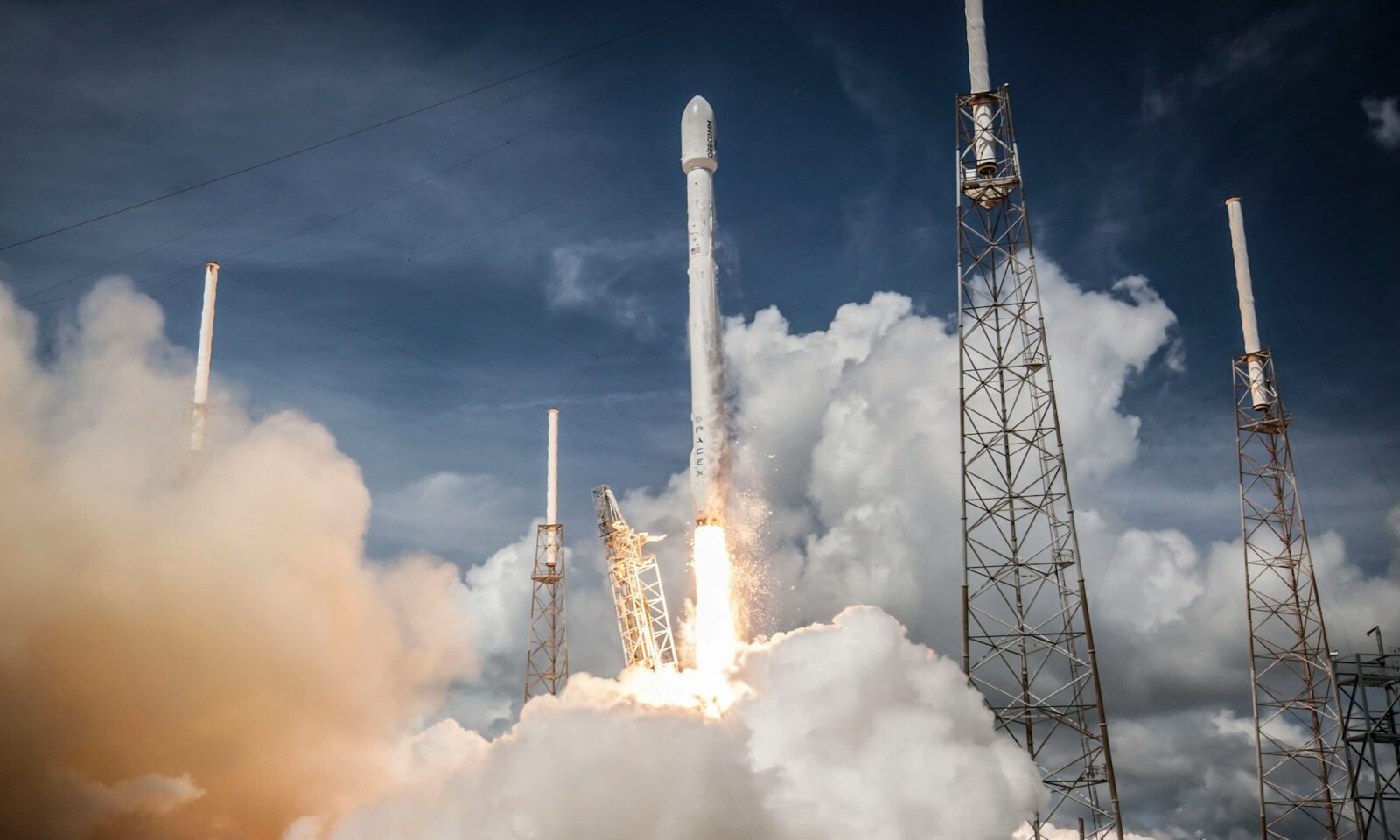
Stoke Space Technologies said Tuesday, Sept. 8, that it completed an initial closing of a $1 billion Series E round to fund its first orbital launch and scale a family of fully reusable rockets. The financing takes the seven-year-old company’s total capital raised to $2.3 billion and gives it a larger financial base for competing in a launch market still dominated by SpaceX.
The Kent, Washington-based company said Point72 Ventures and Spark Capital co-led the round. General Innovation, Glade Brook Capital, US Innovative Technology, Washington Harbour Partners, Woven Capital and Y Combinator also participated. Stoke did not disclose its valuation or how much of the billion-dollar round remains to be closed.
The scale of the investment is notable because Stoke has not yet reached orbit. It reflects investors’ willingness to fund capital-intensive infrastructure well before commercial proof when the potential prize is a larger share of the satellite, national security and space-services markets.
The money funds two versions of Nova
Stoke said the financing will support preparations for Nova Pathfinder’s first flight, expansion of manufacturing and launch capacity, and development of Nova Block 2. The company is targeting early 2027 for Pathfinder’s first orbital launch, while the larger Block 2 is scheduled for 2029.
Pathfinder is designed to carry as much as three metric tons to low Earth orbit, according to TechCrunch’s reporting. The Block 2 vehicle is intended to carry 15 metric tons and use the same core engines, architecture and active heat-shield technology. Stoke says multiple Pathfinder vehicles are already in production and that it has sold launch contracts, though it has not disclosed the customers or contract values.
Both vehicles are built around an unusually difficult proposition: recovering and rapidly reusing the booster and the upper stage. SpaceX routinely lands Falcon 9 boosters, but the rocket’s second stage is expendable. A fully reusable orbital system could lower the marginal cost of launch and increase flight frequency, but the engineering and operating claims remain unproven until Stoke flies, recovers and reflies its hardware.
Launch capacity is becoming strategic infrastructure
Stoke’s announcement frames the round as a response to customer demand for more launch availability and larger missions. GeekWire independently reported the financing and the expanded Nova roadmap, while TechCrunch interviewed Chief Executive Andy Lapsa about the company’s production and flight plans.
That capacity has consequences beyond the rocket sector. Satellite communications, earth observation, defense systems and data services all depend on reliable access to orbit. When one provider controls much of the available cadence, customers face concentration risk as well as scheduling pressure. A credible second source with reusable economics could improve negotiating leverage and give operators more flexibility over deployment timelines.
The funding also illustrates how the AI-era infrastructure thesis is spreading into adjacent markets. Venture investors have poured capital into chips, data centers and power generation because digital growth depends on physical capacity. Space launch is becoming another version of that argument: software, sensing and communications businesses cannot scale orbital products if rockets remain scarce or expensive.
Execution risk remains the deciding factor
The new capital does not eliminate the central risk. Rocket schedules slip, first flights can fail, and full reusability requires more than reaching orbit once. Stoke must qualify its hardware, complete ground tests, activate launch operations and demonstrate that recovered stages can fly again without costly refurbishment.
Executives and investors should therefore separate the confirmed financing from the company’s forward targets. The initial closing is complete; the 2027 and 2029 launch dates are management goals. If Stoke meets them, the company could add meaningful supply to a market where customers increasingly want alternatives. If it does not, the billion-dollar round will mainly show how much capital the next generation of launch competition requires.